
— Mother, we once read Anna Vospianska's articles in the pages of the magazine "Otrok" with delight, and now you are no longer Anna but Abbess Arseniya, the superior of a convent. And one can see that you are in your place, that you love your convent dearly and everything connected with it. Yet far from all people feel that they are living the life they would like to live. Could you share the secret of how to understand where your path lies, and how to dare to follow it unswervingly?
— In fact I do not feel in my place at all, that is, in the abbess's place. But monasticism is a true mercy of God, and it really is the very path I dreamt of for a long time. As for being an abbess, I think hardly anyone at all can say "this is mine".
— You once said that one fateful meeting in a train compartment helped you to find this road in life…
— That meeting had its own path leading up to it. When I was just beginning to go to church, I approached the matter academically and first of all started looking for the "basic literature" on the subject. I began reading the Holy Fathers at once. And I learnt that a person must have a spiritual father.
For some reason in Moscow, where I lived then, a spiritual father simply could not be found. There were many wonderful priests around, nobody turned me away, everyone was kind and attentive. I even asked some of the priests whether they would agree to become my spiritual father, and not one refused. But, with all respect, I could not cleave to any of them, as they say, with a living heart.
And then, the "Moscow — Kyiv" train. I had a ticket, I still remember, in the first compartment. And into that compartment the attendants had put two acquaintances of theirs, without any tickets at all. And they try to persuade me to move to another seat — saying, "there's a priest travelling in there too, why would you want that?". But travelling with a priest was exactly what I had dreamt of! In 20 years of journeys from Moscow to Kyiv and back I had never once met a single priest, not just in one compartment or carriage — in the whole train…
It was during the Dormition Fast, and I had taken with me the book "Земная жизнь Пресвятой Богородицы" ("The Earthly Life of the Most Holy Mother of God") to read on the way. When I saw a priest, and a monk at that, I of course hid the little book under my pillow — so that it would not look as though I had taken it out for show.
The fellow travellers "planted" on us began asking the monk all sorts of questions, and he answered them with absolute composure and full engagement. I sat opposite, frozen, and was his passive support group. I remember being struck by how much he knew and how freely he answered their provocative jabs.
The monk was carrying books that the Moscow Theological Academy had passed on to the library of the Kyiv Theological Academy. The year was 1999, and there was no such abundance of spiritual literature as there is now. I do not know whether they were liturgical editions or some others, but they were being carried in banana boxes. At night a customs officer comes in and asks: "What is in the boxes?". And the monk, with the calm confidence of a man who cannot even imagine that anyone would doubt his words, tells him about the academy's gift.
And this unostentatious calm of his made an indelible impression on me! It was the absolute, perfect confidence of a man abiding in the truth of life, imbued with the truthfulness, the genuineness of everything he was accustomed to live by. The customs officer reached out to check the boxes, but lowered his hand and went out.
Against the background of the worldly way of life I was living and the business I was engaged in at the time, in this seemingly ordinary situation a completely different dimension of life opened up a little for me. The worldly habit of dissembling and fibbing makes a person say many persuasive words, try to prove something, justify oneself. Vladyka Iona had none of this at all. On the contrary, everything was according to the Gospel: "Yea, yea; Nay, nay".
— So the monk you shared the compartment with then was none other than Father Iona, the superior of the Holy Trinity and St. Jonah's Monastery?
— Yes, now Archbishop Iona. And, I think, it was simply out of courtesy that he invited me then to St. Jonah's Monastery.
But I came to the monastery all the same by a miracle. Because for a long time I still stubbornly held out and kept going to the Resurrection "Afghan" church, which is next to the Lavra. And then, "on one of the Sabbaths", I am standing at the bus stop, and still no bus comes. Just then trolleybus No. 14 pulls up: terminus "Botanical Garden". Well, I think, in that case I will go to the all-night vigil at St. Jonah's Monastery.
I arrived for the service, and I cannot put into words what happened to me there… After all, before that I had gone to beautiful Moscow churches and monasteries: the Church of St. Nicholas in Klenniki, the Danilov Monastery, the Sretensky, but when I walked into St. Jonah's Monastery, some wonderful clouding of the mind came over me, a real break from reality.
The litia was ending, the blessing of the loaves was just under way. In the centre of the church were the priests, on both sides the people. And I, like some alien, walk along, looking around me. And at that time the church had nothing like its present splendour, yet I went through an inexplicable shock.
I remember asking how to find Father Iona, and I was told that he was reading the canon. That Vladyka recognised me and was glad (back then I did not yet know that he is glad of all his parishioners) was very important to me, and in a way it even obliged me to justify that joy.
Of course, I did not expect to find a spiritual father in him. Vladyka was then a very young, thin boy and gave no impression at all of an elder or a wise spiritual father. And I was a grown woman, so successful, self-confident, with experience of life. Ah well…
So at first I thought of Vladyka that here I would have one more priest I knew — a good one, knowledgeable. We agreed that I would simply come to him for a talk. But to my own surprise I sobbed my heart out through that whole conversation. My huge handkerchief was soaked through with tears, and Vladyka watched in bewilderment: "Why ever are you crying like this?". After that conversation I asked him to become my spiritual father, and from then on I "cleaved" to him with all my soul.
To this day it is a great riddle for me, a mystery — how this happens. After all, I knew nothing about St. Jonah of Kyiv: who could have entreated him for me? So it was that by just such a path he brought to himself an insect in a distant city that had no idea he existed. And not only me! Our sisters… A wondrous mystery of God. Perhaps it is the saints up there in heaven talking among themselves: "Well, all right, though she is a lost soul, I will take her on". I say this quite without joking, because otherwise I cannot imagine how I came to be beside St. Jonah.
And the meeting with one's spiritual father is a great mystery. Why was it the very young Father Iona of those days who became the most important person in my life, and not one of the eminent Moscow priests? That too is an inexplicable mercy shown to me by the saint.
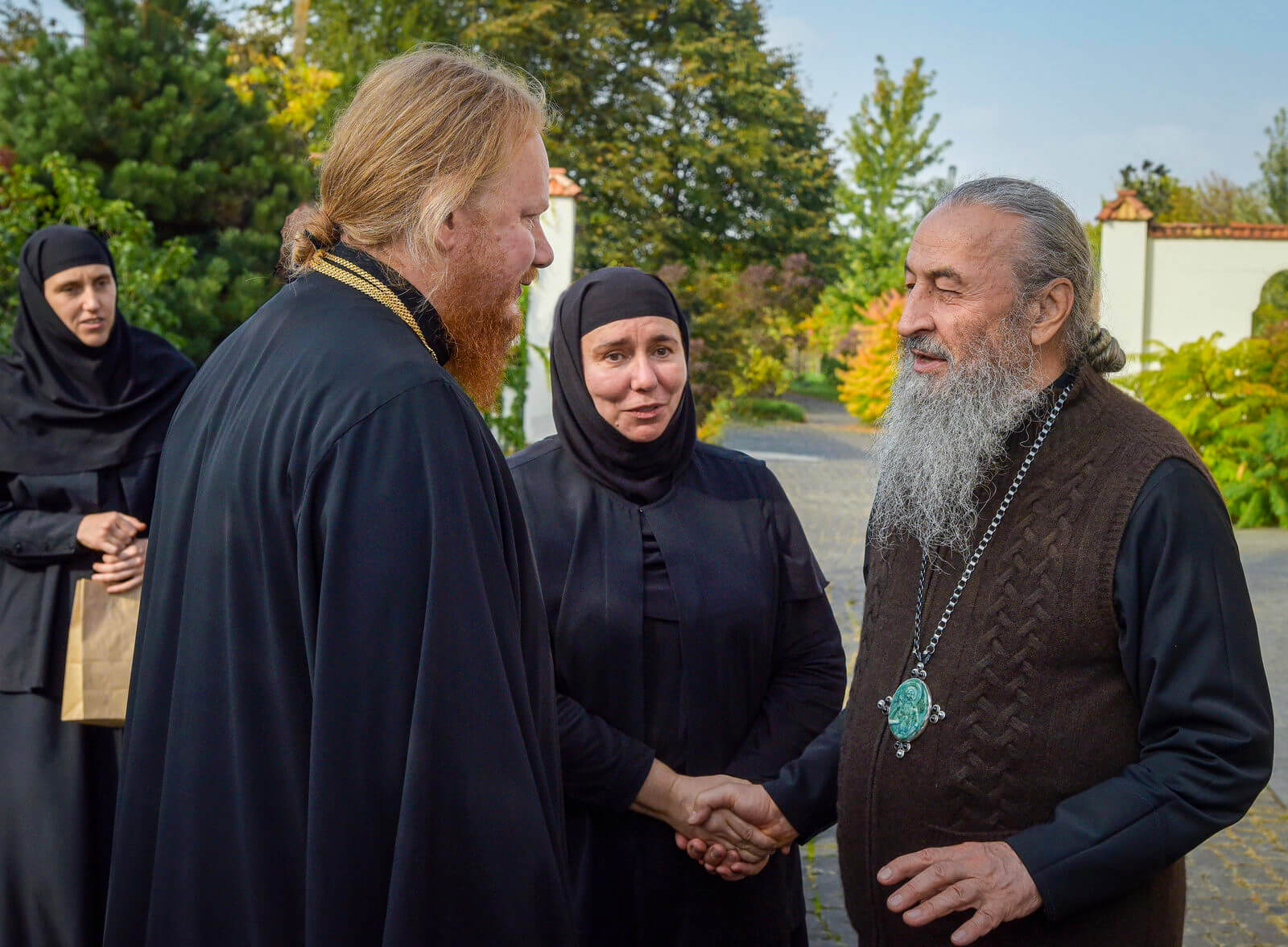
— Your parents were not believers, were they?
— They were not atheists either. Their path to God began with a true martyrdom — with the appearance of a neophyte in the family, that is, me. Because I resolutely and stubbornly drove the whole family into church, literally by force. At first, apparently to calm my "madness", and out of sheer bewilderment too, they did not object. But since they were very warm-hearted people, later, even without my pressure, they gladly went to church and received Communion. And after my father's death my mother became a nun.
— But all the same, how did a Moscow businesswoman become a nun, and in a village monastery at that?!
— I think the Lord, according to His unfailing word: "Ye have not chosen me, but I have chosen you" (John 15:16, King James Version), Himself in some way touches the heart of every person. Personally, I was helped by sorrows. It was a difficult period then: my mother had a most severe heart attack with clinical death, my sister was suspected of having cancer. And all of it at once. It was unbearable for me to think that I would lose two people I loved.
I did not even know how to pray. One time I would cross myself correctly, another time incorrectly — to the horror of the Moscow church old ladies, who would at once rush at me, and I, to avoid their remarks, would run out of the church. But then I sobbed before the icons and paid no attention to anyone, begging the Lord to have mercy on my family. And, evidently, such was His Providence (and this greatly supported me on my way into the life of the Church) that my mother came out of hospital alive, and my sister's diagnosis was not confirmed. And when thoughts of monasticism came to me, even if at first only starry-eyed dreams, the Lord Himself began to build my path to the monastery.
— You said that you dreamt of monasticism. But how did the understanding come that it was really yours?
— I cannot explain. I was baptised already at a conscious age, but I had prayed since childhood, in my own words, of course. At about 14 I saw in a magazine a small note about Pühtitsa with a black-and-white photograph: nuns in white apostolniks raking hay with little rakes. Suddenly I was pierced by the thought that I too wanted to be there with them. Much later I dreamt of the opening of the Martha and Mary Convent, so as to be there. My coming into the Church was greatly helped by the Venerable Martyr Elizabeth, who had just then been glorified. And I very much wanted to be in her monastery.
It is not that I understood that this was mine; it was simply that a longing for another, real, authentic life would not let me go, a life I did not know how to live in the world.
— And when was the question finally settled?
— When I found a spiritual father, I was glad, hoping that he would bless me to go to a monastery. But Father Iona as he was then put me very sharply in my place: "Monks are the special forces. And you — to the baggage train, to the baggage train…". With great "humility" I replied that, thank God, the final decision still rests with the Supreme Commander-in-Chief and not with the line commanders. Of course, Vladyka saw that I had only some lovely illusions about the monastery, and that in reality I was not ready in the least. And so for almost ten years he held me back, did not bless me to go anywhere, did nothing himself and did not give in to my persuading.
Meanwhile, for want of any way out, I took a second university degree and started working. It so happened that new prospects opened up, and opportunities too — everything began to come together. And at the very moment of this upturn Vladyka suddenly phones from Kyiv: "That's it, come, we are going to set up a monastery". Here I froze in a silent scene straight out of Gogol. I think: how can this be, I have only just finished university, I need to get established in my profession!
Fortunately for me, Vladyka came to Moscow on business and gave me some "magic kicks" for such faint-heartedness. It so happened that my father fell ill in Kyiv as well: everything pointed one way. I had to drop everything and come.
Of course, to be the spiritual father and builder of a convent is not even a cross but a concrete slab: carrying so much on oneself. I think Vladyka was waiting for the will of God. And he decided on such a step when he was reading the akathist to the Mother of God before her icon "Three-Handed" and suddenly understood that the time had come. That is how Vilshanka began.
Vladyka had doubts about me as an abbess. An experienced man, he feared my "giddiness". But someone had to see to the construction and the paperwork. And Vladyka submitted to the late His Beatitude Metropolitan Volodymyr a petition to appoint me senior sister in the new monastery. Unexpectedly the Primate struck out the words "senior sister" and wrote in his own hand "to raise to the rank of abbess".
As for organising life in the monastery, I had my own "clear plan", read out of the Holy Fathers — how everything ought to be. Vladyka was surprised at my radical ideas and humbled me in every way. By God's mercy, thanks to Vladyka and not without the spiritual help of the Athonite fathers, an understanding came of how one should live in Vilshanka. My sisters and I try to keep to it.
I wanted to be a nun because I like monastic life. And later, already in the monastery, I understood that here a person lives in absolute truth — above all about oneself. In close community life no demo versions work; on the contrary, they are put to shame at once. Because I can declare all sorts of lofty things about myself as much as I like, but here I am transparent to everyone — just like any sister. Because every day and around the clock it is impossible to pretend, as if standing on tiptoe.
In a monastery it is precisely the best qualities that the Lord gives people, and that in the world only "weigh them down", which are needed. Kindness, unselfishness, mercy, compassion, love, self-denial, the striving to improve oneself — these gifts are present in every person to one degree or another, but the monastery is the place where they are in demand first of all.
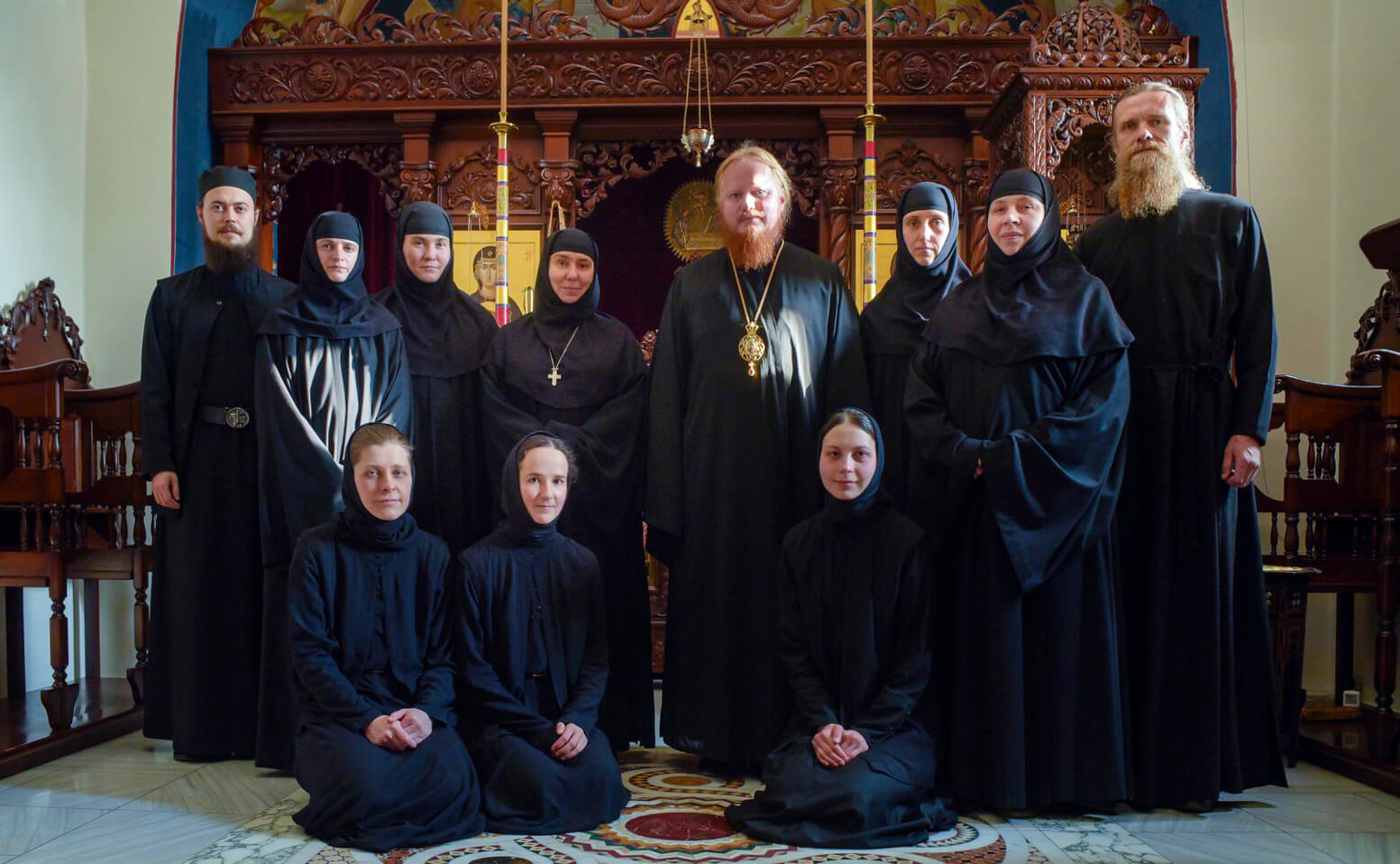
— How can one learn to see what one is called to, and to follow one's own path without missing those signs of when and where to turn in life?
— Our main calling is to do the will of God for us. And we can come to know it from the events of our life. Here is a girl already thirty and over thirty, and there is no family. That is no reason to throw herself into a career, not at all! It is a reason to reflect: if not through childbearing, how then will I be saved? If the Lord does not give me a husband, before whom will I humble myself unconditionally and tame myself? If, of course, one thinks not about the passing moment but about eternity.
It happens that a person does not feel a definite calling to come to a monastery, yet at the same time longs for something higher than what the world offers. Or does not see it as God's will that he should be in the world. In that case I would advise getting to know monastic life all the same, simply considering this path as one of the possible ones. But by no means in order to force oneself into monasticism — rather so as not to deprive oneself of it.
Monasticism is like the path of the apostles to Emmaus, when the heart burns from meeting the Saviour. And the world may fail to quench the longing for things on high, whether by a career or even by a family. That is why one should give oneself the chance to take a path that is more definite, more lofty.
For this you can simply tell your spiritual father that you would like to get to know monastic life. The priest can advise where to go to immerse yourself in it, as far as is possible for a person living in the world. Such a step commits you to nothing, but only widens our possibilities. And, I think, if you keep knocking inquisitively at different doors, the Lord will certainly reveal which path is yours.

Comments