
The story of how the first children appeared in the monastery has already become a local legend. Vladyka Longin (then still Father Mykhail) kept cows in Boiany. In the early '90s times were hungry. And he began to donate milk to the local baby home. The nurses once decided to show the priest how the shelter was organised. What he saw shook Father Mykhail so much that he at once scooped up two little ones in his arms and carried them off with him. That was the beginning of the story of the "family-type children's home", as the monastery shelter is now officially called, and the father of three children of his own became the father of five. Then Father Mykhail adopted another 27 little ones, and when the pages in his passport ran out, he simply began to take everyone under guardianship. He would go somewhere on business and be sure to bring someone back. His heart would not let him pass by orphans abandoned to the mercy of fate. In the end Vladyka took more than 500 children under his care, built houses for them, founded three monasteries and set up a shelter for children with disabilities. And through all of it he never asked anyone for anything...
— Vladyka, tell us about your path to the priesthood.
— From childhood I loved going to the house of God, and I looked at priests as at the chosen ones. My soul longed for it, but at the same time I was aware of my unworthiness... When I was 16, my mother died... And the last words she said to me, with tears, were: "I have no one, my son, to leave you with, I leave you in the hands of God... May the Lord guide you...". I think it was precisely my mother's blessing that helped me go through life. And so I became a priest. I began serving in small villages, then for several years I served in my native Petrashivka, forty kilometres from Chernivtsi.
— You were the first witness of the miracle of the Boiany icon of the Mother of God, the "weeping" one. Tell us, how did it happen?
— The church was very old. The parishioners and I renovated the iconostasis, and two years before that we had ordered a new icon of the Most Holy Theotokos. I prayed before it a great deal, and one day, during the polyeleos at the all-night vigil, I saw that the eyes of the Mother of God had somehow changed, as if they had begun to shine. I decided that after the service, when everyone had left the church, I would take a closer look. And when I came up close to the icon, I saw that tears were flowing from the eyes of the Queen of Heaven. I could not understand how such a thing could be! For a whole month I slept with the key to the church under my pillow. It kept seeming to me that someone wanted to play a joke on me, or that there was some other natural explanation for this phenomenon...
One night at one o'clock I went to the church, opened it and saw that the Mother of God on the icon was weeping. I took a bit of cotton wool and began to wipe away the tears, but they kept appearing again. And so three times. Then I fell on my knees and asked the Mother of God to forgive me my lack of faith... After that numerous healings began. Once a mother brought her little son Vanya to our church. He was only two years old and a malignant tumour had been found in his stomach. And I stood all night before the icon with this baby in my arms. And when the doctors did an ultrasound, they saw that in the place of the former tumour only scars were left... And to this day the mercies of the Theotokos do not run dry, She who has become the patroness of the women's monastery established in Boiany.
— So it turns out that after the appearance of the wonderworking icon your life with your wife changed sharply: the two of you took monastic vows, and there came into being the Bancheny men's monastery and the Boiany women's community, and then the Molnytsia children's home as well...
— Yes, only nobody planned anything. Everything happened and is happening by the will of God. It was impossible to create all this by human efforts. But what is impossible for man is possible for God.
Background: The Holy Ascension Bancheny men's monastery is located in a forest between the village of Bancheny and the town of Hertsa. The foundation stone of the monastery was laid in 1994, and two years later the monastery was opened. The complex includes the Holy Trinity cathedral, the church of the Ascension of the Lord, the church of the Protecting Veil of the Most Holy Theotokos and the underground church of St Sergius of Radonezh, the bell tower, the brotherhood blocks, the superior's house and guesthouses for pilgrims. In 2017, on the site of the nearby skete, a women's monastery in honour of Blessed Xenia of Petersburg was opened. Since the monasteries stand on the Romanian-speaking territory of Bukovina, the services are celebrated in Romanian and Church Slavonic. The children's shelter was originally located directly on the grounds of the Holy Ascension monastery, but later, when there came to be more children than monks, they began to think of building a separate building for them. A convenient place was found four kilometres from the monastery, in the village of Molnytsia. In Boiany, for its part, the parish became the basis for a women's monastic community, whose sisters began to look after the children.
— How and where do you find all these little ones?
— Once I was conducting a funeral service for a young woman. It was winter. I look, and after the service four boys had stayed behind at the grave. Everyone had gone, but they stood there quite frozen, in rubber boots on bare feet, and went nowhere. It was a frost of some 20 degrees outside. And the smallest of them was still a tiny thing. I ask: "Why are you not going home?" And they tell me: "We will not go without Mama. We have nowhere to go." Their father had left them, and now their mother had died. "Your mother is in heaven now," I say. "Will you come and live with me?" They nod. Well, so I brought them to the monastery.
And once, just before the New Year, a newborn girl was left at our gates in a banana box. How long she lay there in the frost I do not know. When I took her in my hands she was cold as stone. Completely frozen. We took her to hospital at once. The doctors said there was no chance. But with God's help the girl was saved. We named her Katenka.
I met Stepka in a care home for disabled children. He has no arms at all; he ran up to me, pressed his face against my cassock and asked: "Please take me away from here!" That is how he came to be here.
At first we thought: well, we will take in 50. Then — 100. Then we decided — we shall manage to look after 150 little ones too. They, poor things, have suffered so much in their short lives that I cannot bear it: to know how much they hurt, and not take them to myself! And when there were already 200 of them, I thought — well, that is all! But how can it be "all"? If I could embrace all the orphans on earth, I would do it. They are weak. They must be loved. All children must be loved. And these must also be helped to survive. I cannot do without them! They are my medicine. If they were not with me, I would have lived on earth in vain.
Background. The number of children at the shelter kept growing: whereas in the early 2000s there were about 50 of them, by 2010 there were already about 250, and according to the data for 2020, 415 children were in the monastery's care. In 2022 Vladyka Longin took in another 110 orphan children from the Kramatorsk infant home.
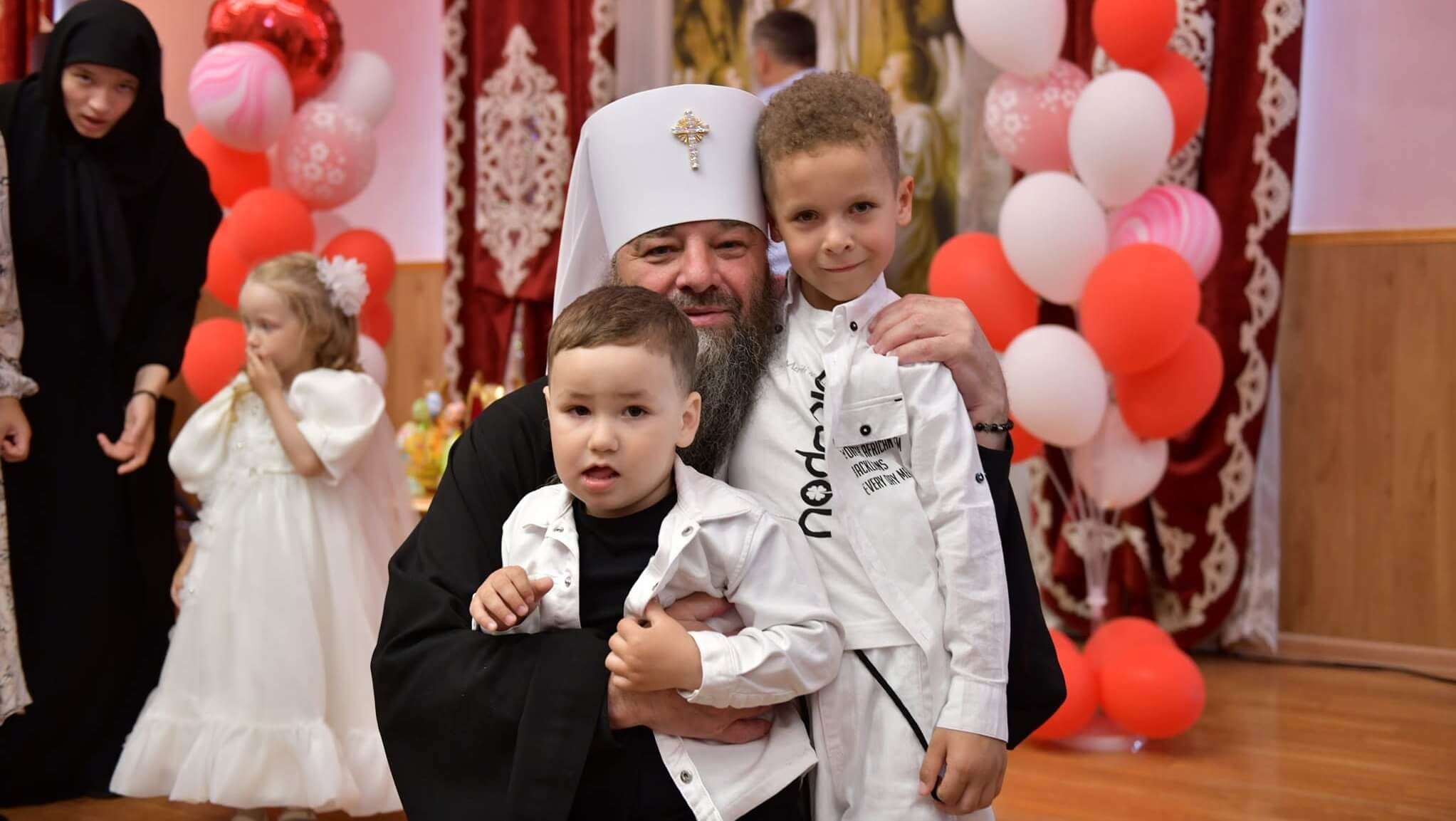
— You are not afraid to adopt children with cerebral palsy and even with still more terrible diagnoses, such as AIDS. How did you decide on this, when even doctors sometimes turn away from them, saying they are not long for this world...
— When a girl was brought to the baby home whose mother had refused her because she was HIV-positive, and I saw her — it hurt me very much. She looked at me so sadly, and I was afraid to touch her, so as not to bring infection to my own children. And in the morning I asked the brothers in the monastery to furnish a room as well as they could, to put a pretty little bed in it, because a child would be living here, a girl.
Little Larisa — that is the girl's name — was baptised, and now she is Filateya. Here, at the shelter, she went through a course of antiretroviral therapy. The doctors were very surprised when they saw her test results: there were no more traces of HIV infection in her blood. Filateya began to live with the other children. Today there are more than fifty children at the shelter with the same terrible diagnosis. Vladyka Longin gathers them from children's homes all over Ukraine. A regional AIDS centre with its own medical staff was opened for them on the basis of the shelter, where the children receive all the therapy they need. And besides, a rehabilitation block for 100 people has been built beside the monastery for boys with disabilities. It has been moved to the foot of the monastery, to be closer to its churches, its loving brethren and the cell of Metropolitan Longin himself.
— Disabled children are usually kept isolated from society. You, however, bring up these special little ones together with other, ordinary, healthy children.
— When children live all together, they become kinder. Such little ones begin to value health and to show mercy and kindness to those little ones who suffer. We see how they pity one another, kiss, embrace. This fills the soul and heart with goodness and warmth. By keeping disabled children isolated, society only loses. And it loses something very important.
— And how are the children brought to the faith here?
— We do not impose faith on the children; on the contrary, we try to guide each one according to the call of his heart. Every year our children have holidays at the sea and in the mountains. They are taught music, singing, drawing. Some have to be nursed, some treated, some taught their letters and the faith. The main thing is that no one should feel unhappy or unwanted. And what else do children need? Only to be loved just as you are. We comfort the children's souls as best we can, and whether they are happy here — judge for yourselves.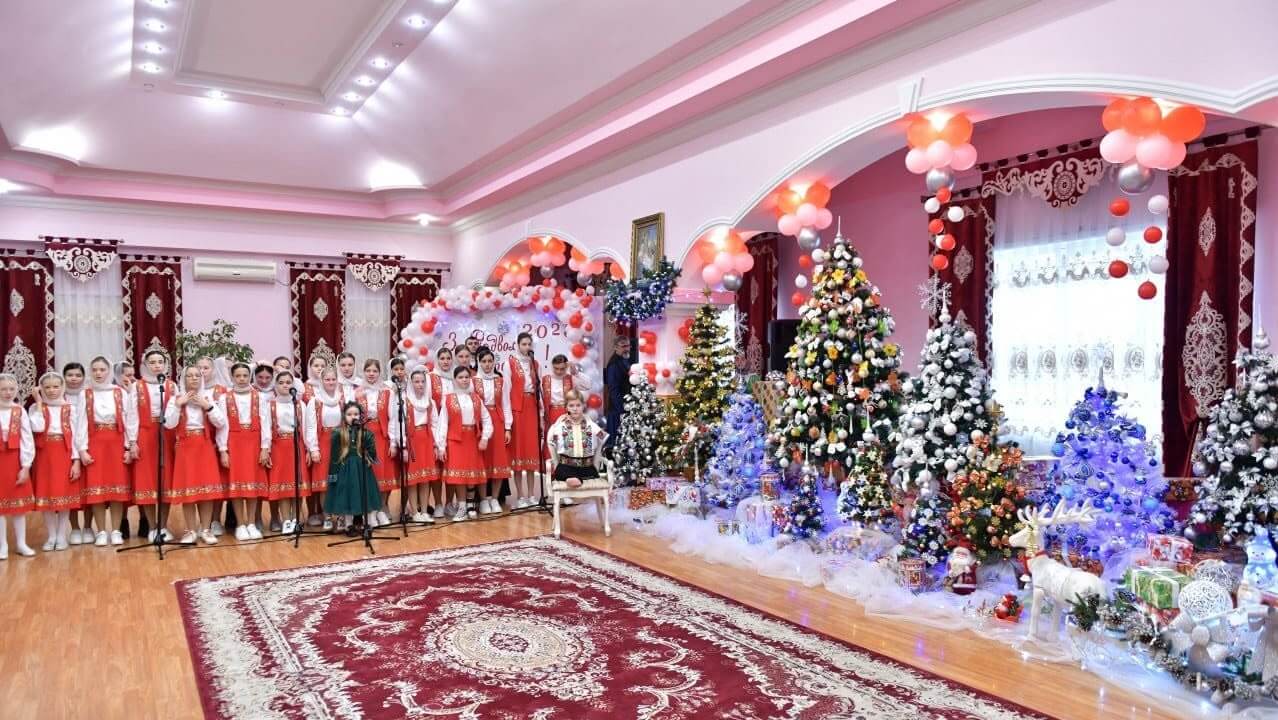
— Vladyka, I know that you never ask for help. But how does it happen that you and the children have everything?
— I think it is the Lord Himself who puts it on the heart of those who have the desire to do good. There are very many good people in Ukraine. I remember how once the oil ran out in the kitchen. And there was no money to buy any. But cooking has to be done. At a single go, for the salads alone (about 15-20 kilograms of vegetables), a whole abyss of oil is used up. And suddenly some local businessman turns up: "I want," he says, "to help your children, I have my own oil mill, so I have brought you some, take it — it is from the heart." I kissed him warmly. And then, in his joy, he brought almost a whole tanker of oil.
The nuns say that "one more woman, who wanted to help the children, brought a cow, and another gave her whole land share, two hectares". On these hectares the nuns grow potatoes for the children's town. Incidentally, there is everything on the monastery's lands: fields, orchards, vegetable gardens, a farm, flower greenhouses. The monastery and the shelter have more than enough of their own produce. The surplus is taken to the surrounding social institutions free of charge. The children work on the monastery farms on a par with the adults.
— And how do you react to the reproaches that it is not a monk's business — to entertain children?
— I agree, the monastic path and the family path are very different. And our shelter now stands apart from the monastery. But I look at my monks and see much goodness in their souls. They know when the children's birthdays are, they buy them presents, they even ask to go and visit to congratulate them. And I do not think that is bad. Heaven rejoices when someone has brought joy to an orphan child. A monk will not depart from his monastic life, but he too must give others goodness. That is not a sin. You know, when the children lived in the monastery, it happened that people came to the service and asked where Father Longin was. And I was playing football with the children. Just imagine what a stumbling block that must have been for people! The abbot — and playing football instead of the service. But what is one to do? "Papa, let's play football!" — how can you refuse? I think the Lord will forgive me this sin, if it is a sin. Without mercy no one will be saved. No one.
One day the younger children asked their papa — Vladyka Longin — for roller skates. He bought them for everyone: more than 200 pairs. But it turned out that there was nowhere to roller-skate in the village. At that point monks came from Bancheny to help and laid asphalt in the back yard of the shelter. Then a playground appeared, a stadium, a huge swimming pool, workshops, music classrooms, a computer room, a library, a multitude of clubs, a large farmstead. So little by little a whole children's town grew up. Three-storey buildings, bright windows, marble staircases, and moreover with equipped access for those children who find it hard to move about on their own. Every house is a different colour. Pink, yellow, blue. The façades of the buildings, the windows, the entrances — everything is decorated with flowers... Inside, the parquet is covered with carpets. Not with fitted carpeting, but with real soft carpets. The walls are hung with paintings: nature, religious subjects. Everywhere — aquariums with little fish. Little birds sing. Lots of greenery. And around the buildings — an incredible number of flowers. Boys and girls live in separate blocks, four to six people to a room. A sister is assigned to each room. In all, more than a hundred people look after the children at the shelter, most of them nuns. The children affectionately call them "mamas". Many of them are still quite young, but what patience and love for their charges, whoever they may turn out to be — a nursing infant or a senior pupil.
— Vladyka, and how do you regard parents who abandon their children, such as, for example, your blind, deaf and mute boy Gena?
— I will say not what people usually expect to hear. I will say that their parents are holy people, I pray for them. Because these children could have ended up on a rubbish dump, they could have killed them when they were a month or two old... But the grace of God held them back from this step... And indeed, by helping these children we save our souls.
Those who see these children, read about them, watch films, become kinder. More goodness comes into the world. That is very important. To cultivate compassion. For the Apostle said that your faith without deeds is dead (James 2:26).
I once died: I had a heart attack, the doctors could do nothing. And the sisters, without my permission, brought the children to me. I began to smile so that they would not see that I was unwell. And then I felt better. I survived. These children save us. And that does happen: a mother cannot die while her children are near. The children went out into the street — and the mother died...
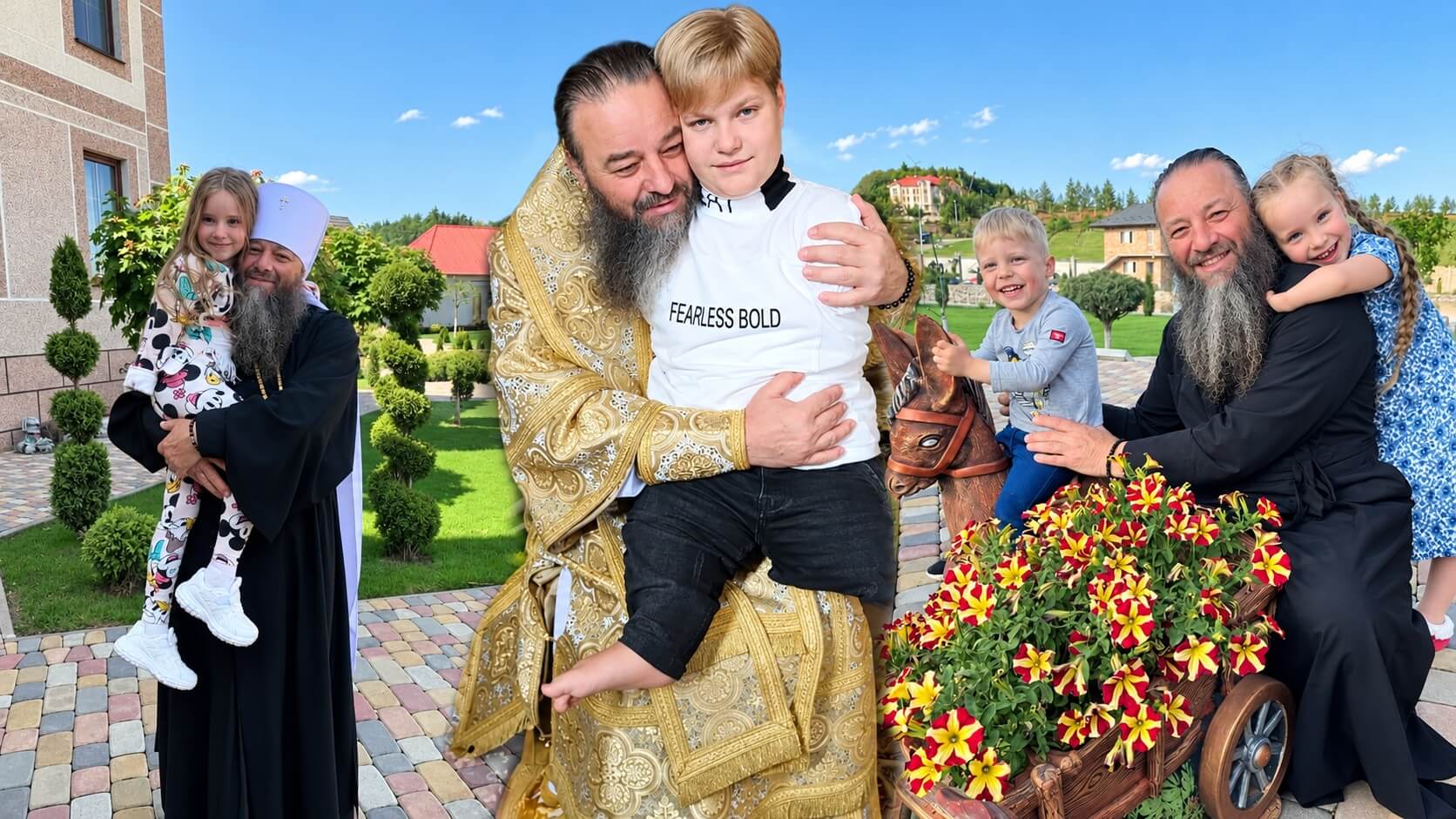
— And why do you think there is so much suffering in the world?
— No one can see the soul, but in the soul there lives love — pure and real. Many people talk about love in this world. But about living love, spiritual, of God, few know. If there is love from God in a family, it will overcome all trials. But if it is a matter of bodily, carnal love, when intimate relations are called love, then spiritual relations die and the family falls apart... The tragedy is that the family and moral traditions that were formed over millennia have been lost — in Christian love, in love for God and man, in honouring parents and elders, in compassion for one's neighbours, in diligence... All this is now being lost rapidly. I remember even my own youth, my childhood — everything was different, the lads went to dances, met girls, but all of it was cultured, decent. A young man or a girl could not sit on a bus if an elderly person was standing beside them. And now this is the norm. If you saw that your mother was coming with water, you ran to meet her to help carry that water... Therefore our task is to do good, so that there may be more of it in this cruel world.
— Now everyone talks about crises — economic, spiritual. How can life be changed for the better?
— To change life for the better one must begin with faith in God. With faith, a person can find even a morsel of bread sweet and be made happy by it. We are all the time looking for someone to blame, looking for causes in external circumstances, only not in our own soul. It turns out that everyone is to blame except ourselves. The president is to blame, the government, the party, the mayor — anyone but us. But one must change life around, beginning with oneself. Both in state-building and in one's personal family life, in building a family — one must begin with oneself.
— But how does one take the first step?
— I know that to come into a church for the first time is not easy. Even purely physically it is hard to stand there when you know nothing and understand nothing. But at first you can stand at least five or ten minutes and pray in your own words: Lord! I do not know Thee, I do not know how to pray to Thee! I know nothing about Thee, but I know that Thou art! I know that without Thee nothing is done in this world. Help me, O God! Change my thoughts, my feelings, renew my soul, my life, as Thou knowest, as is pleasing to Thee! Thy will be done in me! And then light a candle and cross yourself with a bow. And so a second time, a third, a fourth... And little by little, bit by bit, the soul will come alive and feel the grace of God. And the soul will want to be in church, to hear the voice of God. And in time a person will notice that he is becoming kinder, that it is now easier for him to drop a kopeck into the church box, to give to the poor. Not out of duty, but at the prompting of the heart: you feel warmth and love for the person, and you want to help him. And in general to help the one who is wronged, who is sick, who suffers, who is lonely and destitute. And then the Lord, seeing such a renewed heart, a self-sacrificing soul, begins to give that person a hundred times more... Such is the spiritual law.
— Have you experienced this yourself, Vladyka?
— You know, when my mother died, we lived very poorly, often there was simply nothing to eat. But I prayed to God, I wept before Him. And in my soul there arose a feeling of pity for people. And when I gave to someone more unfortunate than I was my last kopecks, the Lord returned it to me a hundredfold, and above all — my soul as if soared up to heaven, such happiness I felt, such joy as neither fame nor money can give! Neither success nor wealth — nothing in the world will replace the joy that is sent to us by the Lord Jesus Christ.
— You have such a workload, an enormous number of children, three monasteries, and on top of everything episcopal cares. How do you cope with all this?
— It is not easy at times. And although I have many helpers, I sometimes no longer know when it is day and when it is night. And then there are my personal illnesses, people come, pilgrims, thousands of people... It is not easy. Once I began to grumble, saying I could not go on, that I was tired... But, you know, I remember, I had to go to a home for the disabled, to the children there (that was when we took our Stepa, the one without arms). And I saw there children who have lain in bed for years and will never be able to get up, and I said: "Lord! From this day on I will never say that things are hard for me. Give me strength, O God!.." Sometimes I want to complain, to plead tiredness and exhaustion, but I remember these words, spoken in a house of children's suffering...
— Share with us the secret of kindness.
— There can be no secrets of kindness. Good comes only from God. And we have only evil, which is from the devil. When a person believes in God, has love for Him, then the Lord helps him in everything good, makes him such as our Heavenly Father wants to see him.
Without God no one can do anything good. When we have done something good, it is important to remember: it is not our merit, it is the Lord who acts through us. And if we begin to think that it is we ourselves — then we are not God's children.
— Not everyone is capable of such active love as yours...
— Everyone. For those who believe in God, everything is possible, I assure you. There are no chosen ones, we must all be like this. The Lord taught us, after all: "Be kind, as I am kind." This is the rule, not the exception. This is how God conceived us.
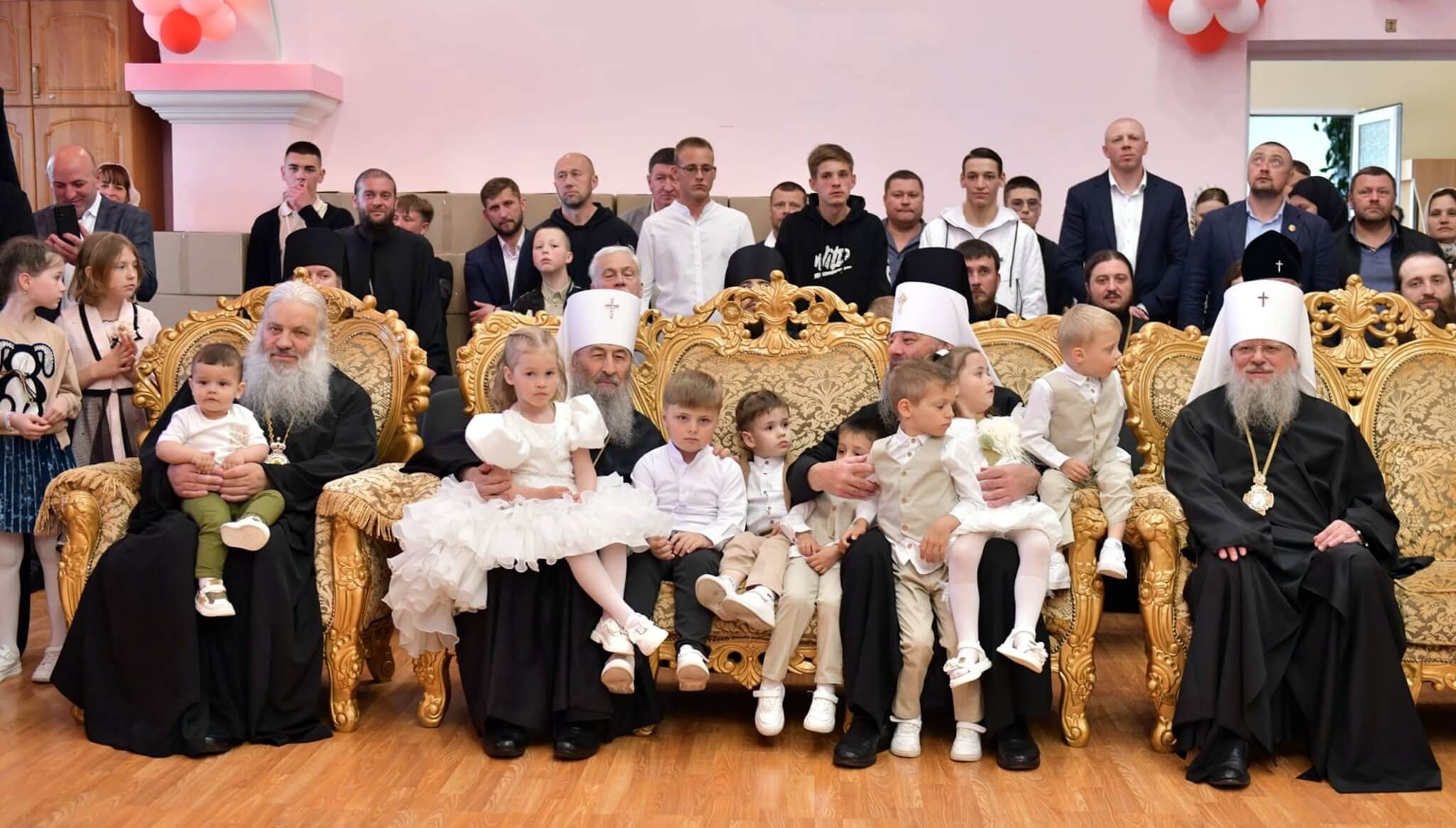
— Vladyka, and what gives you the most joy?
— I rejoice in everything: in the sky and the earth, and in what grows upon it, and what lives and multiplies upon it, and I rejoice in every day. But most of all I rejoice when I see God's creation — man. How beautifully the Lord created all people. And when I see them in church, I do not want to part with them. I want to embrace everyone who is in the church. I want to say kind words to everyone, I want to tell them how I love them and how I shall look forward to meeting them every week...
And when I go on pilgrimages, to the Holy Land, for example, or somewhere else, I always place three candles in honour of the Holy Trinity and light them for all the peoples of the earth. And I say: "Lord, I light these candles for all the people on earth. Help them, Lord, that they may know Thee! And that we may all be there together — in Eternity in Heaven...".
— Thank you very much, Vladyka, both for your deeds and for your kind heart.
Based on materials by Viktor Buziian and Serhii Heruk

Comments