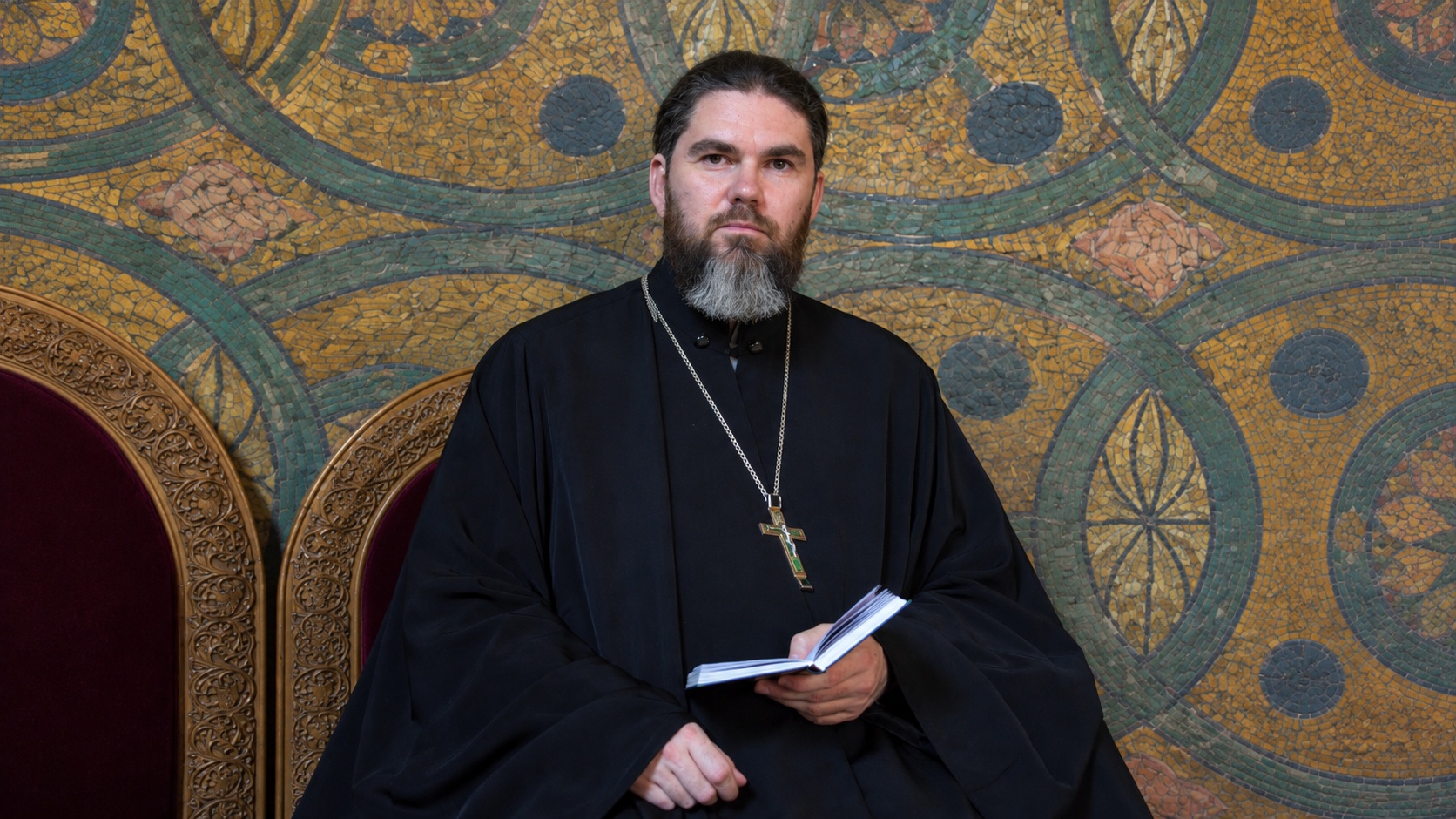
Prayer is a conversation of the human soul with God. In this converse with God a man sets forth his desires and his requests, renders thanksgiving to God and glorifies Him. That is why prayer is divided into prayer of petition, prayer of thanksgiving and prayer of praise.
Only to him who prays is given the promise of nearness to God and of salvation: "Draw nigh to God, and he will draw nigh to you" (Jas. 4:8, King James Version); "The Lord is near to all that call upon him" (Ps. 144:18, Brenton's English Septuagint, 1851). Prayer is not only a means for the acquiring of virtue - it is itself a virtue in its living expression. Prayer gives wings to the human soul, makes it light and capable of every good deed, brings down upon it the abundance of the grace of God, and makes human life truly Christian. As for the object of prayer, it may be general — for the salvation of the whole world, and particular — for a man's own personal needs.
Whoever would pray with true prayer must:
1. Pray with faith, in no way doubting the power of prayer. "And all things, whatsoever ye shall ask in prayer, believing, ye shall receive," says the Lord Jesus Christ (Matt. 21:22, King James Version). "But let him ask in faith," writes the Apostle James, "nothing wavering. For he that wavereth is like a wave of the sea driven with the wind and tossed. For let not that man think that he shall receive any thing of the Lord" (1:6–7, King James Version). The consciousness of one's own unworthiness must not hinder faith and hope while the prayer is being uttered, for we hope not in our own merits but in the merits of the Lord Jesus Christ and in the mercy of God.
2. Have humility and the consciousness of one's own unworthiness. The parable of the humble and "justified" publican and of the proud and "unjustified" Pharisee is well known. "A broken and humbled heart God will not despise," says the king and prophet David (Ps. 50:19, Brenton's English Septuagint, 1851).
3. Free the soul from every kind of sensuality, so that it may rise easily on high and breathe the finest air of eternity. That is why the Lord commanded us to pray thus: "And take heed to yourselves, lest at any time your hearts be overcharged with surfeiting, and drunkenness, and cares of this life" (Luke 21:34, King James Version). It is not in vain that from the most ancient times and among all peoples prayer has been joined with fasting. Everyone knows from his own experience how hard it is to pray on a heavy stomach. In general, a man who is unable to master his sensual inclinations cannot be a true man of prayer.
4. Show concentration of thought and of spirit, a strict attentiveness. Its opposite is distraction. Even great men of prayer confessed that they did not always succeed in escaping distraction at prayer. One must prepare oneself: looking upon the icon, call to mind the presence and the majesty of God, put away one's ordinary occupations and that place which may draw the thoughts away from prayer and scatter them. "Before thou prayest, prepare thyself" (Sir. 18:23, King James Version), writes the Wise Man. "But thou, when thou prayest, enter into thy closet, and when thou hast shut thy door" (Matt. 6:6, King James Version), says the Lord Jesus Christ. And when extraneous thoughts come into the head during prayer, then, in the words of Saint John Climacus, they must be beaten back by the mind at the first encounter.
5. Offer up one's own will as a sacrifice to the will of God (prayer is a sacrifice).
6. Drive out of the heart all the passions. Without purity of heart true prayer is impossible. God will not set up His throne in a soul in which the shrines of idols are ranged. The Apostle Paul says: "The Lord knoweth them that are his. And, Let every one that nameth the name of Christ depart from iniquity" (2 Tim. 2:19, King James Version).
7. Be reconciled with one's neighbours. Of discord with one's neighbours as a hindrance to prayer that is heard, our Lord Jesus Christ Himself speaks: "Therefore if thou bring thy gift to the altar, and there rememberest that thy brother hath ought against thee; Leave there thy gift before the altar, and go thy way; first be reconciled to thy brother, and then come and offer thy gift" (Matt. 5:23–24, King James Version).
From all that has been said it follows that prayer stands in close connection with the whole of a man's life. He whose life is not directed towards becoming an acceptable sacrifice to God is not prepared for the sacred sacrifice of prayer. The man born blind who received his sight judged well when he said: "God heareth not sinners: but if any man be a worshipper of God, and doeth his will, him he heareth" (John 9:3; Luke 6:46, King James Version).
By what signs may one know that a prayer has been heard?
By three signs:
1. By the sense in oneself, after prayer, of an inward calm, of the peace of God which passeth all understanding.
2. By observing in oneself an increase of a higher power, which quickens us in the midst of our weaknesses.
3. By an inward illumination. When all this has come to pass, then the words of Christ are fulfilled: "We will come unto him, and make our abode with him" (John 14:23, King James Version).
It happens at times that after prayer nothing particular is noticed; now and then there even comes a state of dryness or of a certain discontent. This must not trouble the Christian; he must go on with his work, he must pray at the hours appointed for prayer. We know already that God is not only the giver of good things but also the teacher of man. In order to try and to strengthen the faith, the sincere devotion and the patience of the one who prays, God at times closes His heaven to him and withdraws the spiritual consolation that was sent before.
The Christian's prayer must be unremitting. It must be as unremitting as, in the words of the Lord's parable, the widow's plea to the judge for protection from her adversary: "And shall not God avenge his own elect, which cry day and night unto him, though he bear long with them?" (Luke 18:7, King James Version). The Apostle Paul writes: "Continue in prayer, and watch in the same with thanksgiving" (Col. 4:2, King James Version).
In the struggle with the hindrances to prayer, and within prayer itself, carried on without omissions and without slothfulness, the gift of prayer is acquired — that is, a disposition to prayer and a capacity for perfect prayer. One may say that the gift of prayer, like the other spiritual gifts, is sent to the Christian by the mercy of God, and yet that it must be acquired by him. On the one hand, the Christian must be attentive to the visitations of his soul by the Spirit of God; he must pray especially at those hours in which he feels a disposition to prayer, and must ask God to send down upon him the gift of prayer. But on the other hand, he must not remain without prayer in those times when he feels no disposition to it; he must submit to the discipline of prayer, and be aware that prayer is his duty and must therefore be fulfilled, like every other duty.
The Apostle enjoins Christians to pray without ceasing (1 Thess. 5:17). And the Lord Jesus Christ Himself said: "Watch ye therefore, and pray always" (Luke 21:36, King James Version). This does not mean that we must lay aside our earthly affairs and spend whole days and nights in prayer. Even the hermits and desert-dwellers of the first centuries, those perfect examples of contemplative prayer, alternated prayer with earthly cares. The commandment of unceasing prayer refers not to outward prayer, expressed in set words and in the posture of the body, but to the inward, to prayer in the spirit, according to the word of the Apostle (Eph. 6:18). He prays without ceasing who keeps unceasingly in his spirit a prayerful disposition; who, even in the midst of earthly labours, lifts up his mind and heart to God the more often, and above all begins and ends his work with prayer; who directs all his deeds to the glory of God and builds his life in accordance with the will of God. Saint John Chrysostom writes: "Do not tell me that for a man occupied with affairs it is impossible to spend the whole day in prayer. It is possible. Prayer needs not so much sounds as thought, not the lifting up of hands but the raising of the mind; not an outward appearance but an inward meaning. No place and no time can hinder this. If only thy spirit be kindled with prayer, then, though thou dost not bend thy knees, nor lift up thy hands, nor smite thy breast, yet thy prayer is perfect"
