In Orthodoxy monasticism occupies one of the principal places, setting the tone of the whole life of the Church. The ground of its establishment was both Holy Scripture and the ascetic life of the ancient Church. This feature of monasticism is emphasised by the Russian religious philosopher Vasily Rozanov: “Monasticism is deeply rooted in the spirit and the essence of Christianity, and to be convinced of this it is enough to open the truthful accounts of ancient years. We shall see that the spirit of monasticism was born together with the preaching of the Gospel, from the very beginning of Christianity; the souls most faithful to the good news chose the path of renunciation of the world and of its attachments. The ‘Venerable ones’ appeared on earth in the persons of those who with all the strength of their souls strove to be made like unto the Sweetest Jesus.” It was precisely the desire to follow Christ — “If any man will come after me, let him deny himself, and take up his cross, and follow me...” (Matt. 16:24, King James Version) — that in the end became the foundation of Christian asceticism, on the basis of which monasticism later appeared.
And indeed, by the just observation of Metropolitan Hilarion (Alfeyev), the Lord stands before us “as the ideal of the perfect monk: He is unmarried, free from family attachments, has no roof over His head, wanders, lives in voluntary poverty, fasts, spends His nights in prayer”.
So too the life of the Most Holy Theotokos. Her podvig of obedience became the best example for imitation and was vividly expressed in the words of Mary spoken at the archangel's annunciation: “Behold the handmaid of the Lord; be it unto me according to thy word” (Luke 1:38, King James Version)”.
The question of the time when monasticism appeared calls for separate consideration. In church literature its beginning is most often assigned to the fourth century. It would, however, be more correct to say that in the fourth century monasticism was organised as an institution, that monastic rules appeared and the regulations of cenobitic life were formed. For monasticism itself is mentioned earlier as well. For the venerable Theodore the Studite, for instance, the monastic life was in essence almost a name for genuine Christianity: “Some people ask where the custom came from of renouncing this world and becoming monks? But their question is the same as asking where the custom came from of becoming Christians? So too St Basil the Great often calls monks simply ascetics among the Christians.
Besides this, another reason why monasticism became “noticeable” as such only in the fourth century was that it was precisely at that time that the mass persecution of Christians ceased, and monasticism was able to come out from under the “shadow” of such a phenomenon as martyrdom, which was held to be a more radical method of imitating Christ. This explains why monasticism came to be called “bloodless martyrdom”.
Thus the monastic life was at first concentrated in the places where the greatest number of Christians lived. These were people who lived in virginity and continence and who sometimes united into communities of “zealous Christians”. Life in virginity and continence is the chief feature of which the authors of the second and third centuries speak when they describe early Christian asceticism. Professor Evdokimov notes that “individual hermits and even small ‘monasteries’ existed in the second and third centuries both in Egypt and in Sinai”. In time the centre of monasticism shifted into the deserts and other remote places. And already at the end of the third and the beginning of the fourth century we see the development of monasticism throughout the Christian East. At that same time, when monasteries were being formed as definite organised groups of Christians headed by a superior, a third monastic element — obedience — was joined to purity and non-possession.
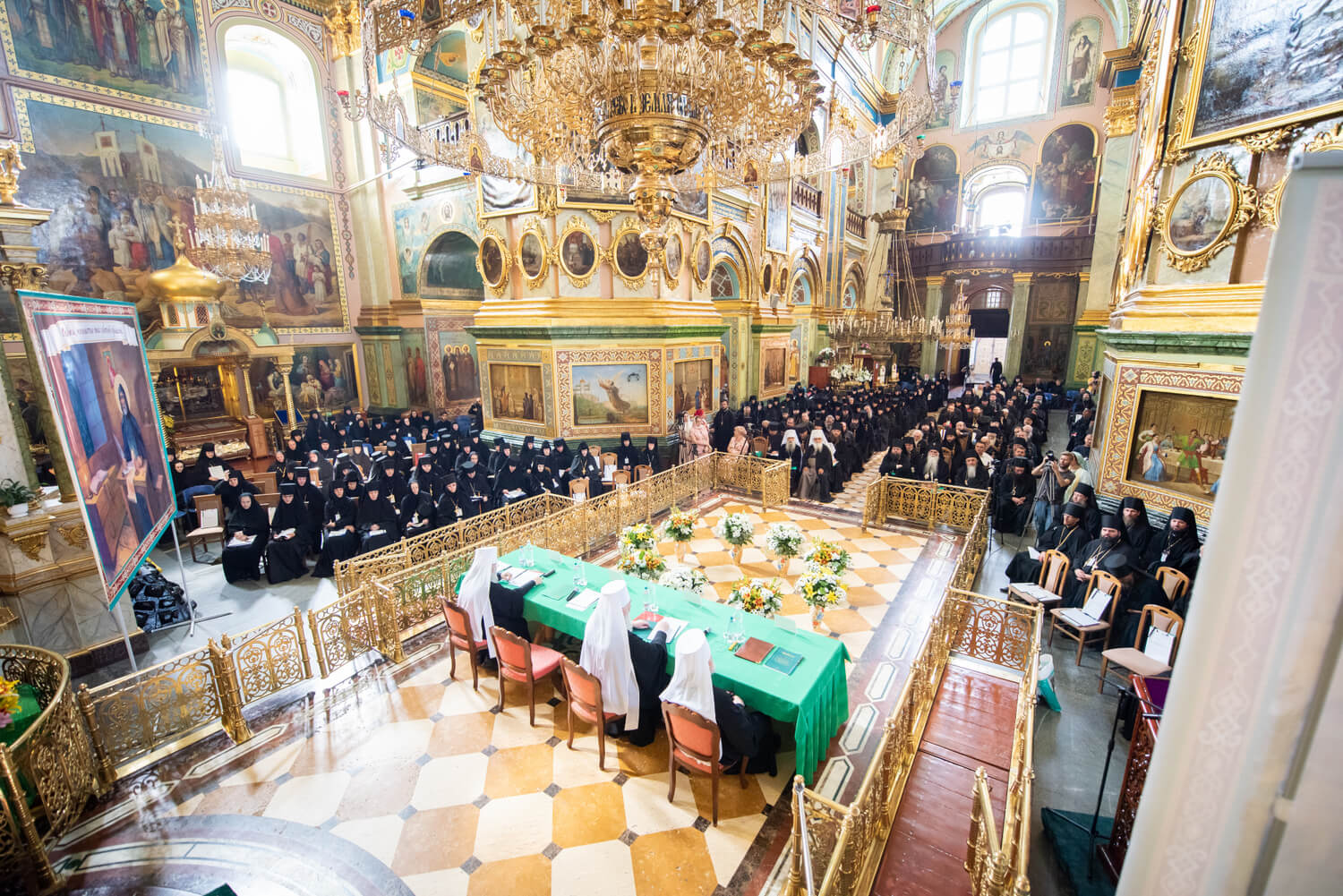
The monastic communities of the ancient Church had various forms of existence. The most widespread was the cenobitic way of organising a monastic community, when the monks lived in a common monastery under the direction of an experienced instructor — the abba. Such an order of the monks' life was prescribed by the cenobitic rule.
Together with this, eremitism was also popular, the so-called anchoretic type of monasticism, when the monks lived separately in the desert. Such ascetics were guided by their own rules, following in this the commandments of the Gospel.
In the ninth century in Byzantium the monastic rule of the Studion monastery acquired considerable influence, and alongside it the Jerusalem monastic rule was developing in the East. In Rus', with the acceptance of Christianity, the Studite rule was adopted first, but from the fifteenth century it was entirely displaced by the Jerusalem rule, which we use to this day.
In the administrative and canonical aspect of monastic life the Ukrainian Orthodox Church is guided by the “Regulations on monasteries and monasticism”, which was adopted at the Bishops' Council of the Russian Orthodox Church on 29 November — 2 December 2017. During the discussion of this document many comments on its content were considered. Every disputed question was carefully worked through and the corresponding corrections were entered into the final document. Particularly acute were the questions of the appointment of an abbot or abbess, of the administration of a monastery on the part of the bishop, of monastic education, of leaving a monastery and of a monk's transfer from one monastery to another. As a result the adopted document became the basis of the regulation of the monastic life of the Russian Orthodox Church. Moreover, this “Regulations” is in its way the first such document in history in which practically every side of the regulation of monastic life is contained. The “Regulations” approves the development of the inner monastic traditions and customs in the line of the patristic heritage. Especially valuable in the document are the sections devoted to the spiritual life of a monk, to the cell rule, to prayer as the foundation of monastic life, to the reading of patristic literature and especially of Holy Scripture, to the education of the monastery's brethren, to the abbot's spiritual conversations with the brotherhood and to the spiritual guidance of the monks.
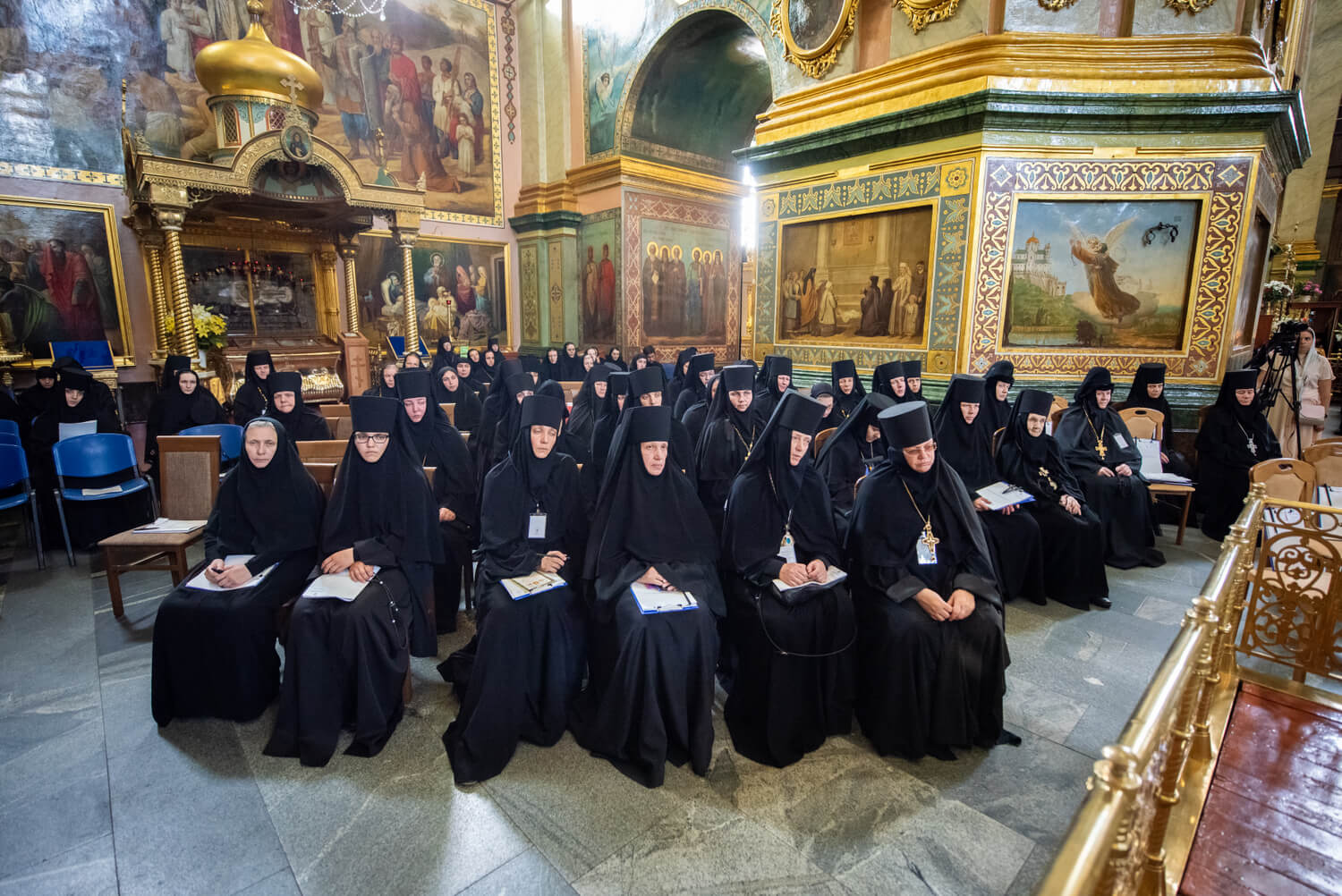
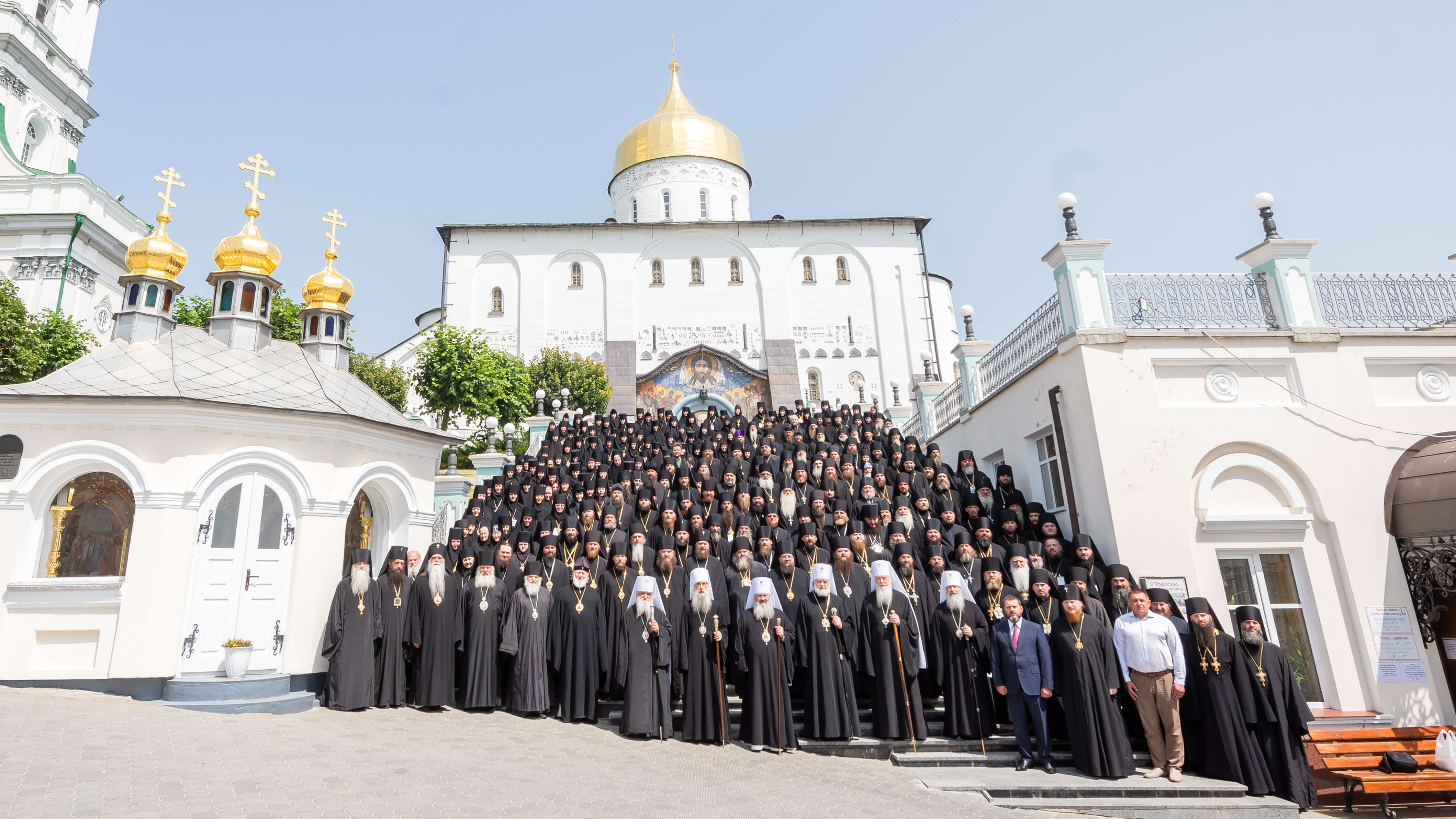
In accordance with this document, by their subordination monasteries are divided into stauropegial, diocesan and dependent. In this form there exist today in the Ukrainian Orthodox Church 258 monasteries and 56 sketes, of which male — 133 monasteries and 33 sketes, female — 125 monasteries and 23 sketes, in which approximately 4,500 monks and nuns bear obediences (70% of the whole number of monastics in Ukraine). A further 1,100 monks in holy orders bear the obedience of parish ministry.
In the modern world the greatest problem, or better to say the greatest reproach against monasticism, is its supposed isolation and estrangement. Monks are often reproached with supposed egoism, with their indifference to the problems of the world, with withdrawal from the solution of social problems, with an inclination to consider themselves higher and better than other people. But we know well that the monastic withdrawal from the world is not a manifestation of contempt for others, is not a condemnation of another way of salvation – the way of the labour of Christianising and transfiguring the world itself. From the desert the monks bless Christian towns and villages, and by prayer and fasting they serve the world for its salvation. The hieromartyr John Vostorgov affirmed that “monasteries are, as it were, reserve reservoirs of religious inspiration; they nourish and moisten the dried-up deserts of the spirit of worldly life, they give life-giving and saving moisture to thirsting souls”.
It must be said that monasticism arose out of the idea of a particular manifestation of love for God and for people, and not out of egoistic motives of attaining only personal salvation. The venerable abba Dorotheus says that our life must be a road to perfection, to the attainment of that love which arises out of our turning to God and to our neighbours. Let us recall the comparison the abba offers: “imagine a circle drawn upon the earth, the middle of which is called the centre; and the straight lines going from the centre to the circumference are called radii. Suppose that this circle is the world, and the very centre of the circle is God; and the radii, that is, the straight lines going from the circumference to the centre, are the ways of human life. Therefore, in so far as the saints enter within the circle, desiring to draw near to God, in so far, according to the measure of their entering, do they become nearer both to God and to one another; and as much as they draw near to God, so much do they draw near to one another; and as much as they draw near to one another, so much do they draw near to God.”
Therefore, for drawing near to the spirituality of the Church, the simplest (though not the only) way is monasticism. This was especially reflected in the experience of the Eastern Church. Contemporary researchers, and in particular the theologian Paul Evdokimov, confirm these words: “The best way of entering into Orthodox spirituality is to grasp it through monasticism, which played the leading role in its formation.” Of this same thing protopresbyter John Meyendorff also spoke: “the experience of monasticism... always remained the true essence of Orthodoxy”. It is interesting that neither of these two theologians was a monk, and yet they both set monasticism very high.
So it is that monasticism in the history of the Church became that guide which goes ahead and reminds all others that the final goal of the life of every Christian is deification. Of the deification of man, as “being made like unto God so far as is possible and being united with Him”, or as life in Christ, with Christ and for the sake of Christ, many holy fathers of the Church of Christ have spoken. In doing so they point to the way of attaining this state through inner labour upon oneself, through struggle with sin and victory over one's own passionateness by the help of the grace of God”.
In the end patristic thought comes down to this, that monasticism is the most direct way to deification, to the acquisition of the grace of the Holy Spirit, the way to the Heavenly Father and the true road of salvation.