
The wondrous and mysterious angelic world... Neither the Bible nor the patristic heritage reveals in full a complete picture of these enigmatic beings. Much about their appearance still remains a matter of conjecture and supposition. Even St John of Damascus, with all his depth of contemplation, was unable to make sense of it all: "The Creator alone knows the form and definition of this essence," this learned man confessed. And yet a certain idea of the angels, if not as full as one might wish, gradually took shape.
Names
Quite a number of different names are applied to the angels. Thus some holy fathers call them spirits (Blessed Augustine), some "secondary lights", "borrowing their light from the first and unoriginate Light" — God (St Gregory the Theologian), some call them noetic powers (that is, endowed with mind), and others the heavenly host or the heavenly powers.
The very word "angel" from ancient Greek (angelos) translates as "messenger". In this lies practically their whole activity. Hardly bound by time and space, they can easily cross vast distances in the twinkling of an eye in order to minister to those who "shall be heirs of salvation" (Heb. 1:14, King James Version).
When the angels were created
Holy Scripture gives no direct indication of when the angels were created. Only on the basis of the words of the Book of Job, "When the stars were made, all my angels praised me with a loud voice" (Job 38:7, Brenton's English Septuagint), can one conclude that the angels were created no later than the third day of creation.
At the same time, most of the holy fathers agree that the angels were created before the first day, that is, before the visible world came to be. This conviction rests on the idea of a sequence in creation, according to which the spiritual must exist first, then the material, and finally man, who, as the link between the worlds, unites both in himself (St John of Damascus).
Bodilessness
The notion of angels as bodiless beings has become familiar to many. The Bible more than once speaks of them as "invisible" (Col. 1:16) and even as bodiless (Luke 24:39). Yet most of the holy fathers hold that it is more correct to speak of a certain subtle corporeality of the angels. St John of Damascus writes: "It is called bodiless and immaterial in comparison with us. For everything, compared with God, proves to be both gross and material."
The Fathers of the Seventh Ecumenical Council (787) affirmed the teaching on the subtle corporeality of the angels as generally accepted, thereby laying the foundation for the possibility of depicting them in icons.
The number of angels
In the pages of the Bible we find no direct indication of the number of angels. The holy fathers, except perhaps St Gregory of Nyssa, held that this number, though unknown, is fixed. That is, from the moment the angels were created by God their number has remained unchanged. At the same time it is held that the angels are incomparably more numerous than people. For example, Sts Gregory of Nyssa and Cyril of Jerusalem saw in the Gospel parable of the one lost sheep (Matt. 18:12), for whose sake the owner leaves the ninety and nine and goes to look for it, an indication of the numerical ratio of angels to people as ninety-nine to one (the one lost sheep).
The angelic hierarchy
Owing to their differing measure of perfection, the angels are subject to a certain hierarchy. In the Corpus Areopagiticum, known more widely as the work of St Dionysius the Areopagite, the angelic world is divided into three hierarchical degrees (triads), each of which has three ranks: the first triad — Seraphim, Cherubim, Thrones; the second triad — Dominions, Powers, Authorities; and the third triad — Principalities, Archangels, Angels.
Sometimes in patristic writing another order of naming the angels is found, but as a rule even in these cases the hierarchy is presented as ninefold. And on the basis of the words of the Apostle Paul (Eph. 1:21) one may suppose that there exist other angelic ranks, as yet unknown to us, which will be revealed only in the age to come. So the teaching on the heavenly hierarchy remains not fully disclosed. In the words of Blessed Augustine, "that there are thrones, dominions, principalities and powers in the heavenly dwellings I believe unshakeably, and that they differ among themselves I hold without doubt; but what they are and in what exactly they differ from one another, I do not know."
What is more, the question of their consubstantiality also remains in the darkness of the unknown: that is, do the angels have a common nature? Here too the opinions of the holy fathers differ; many of them, however, hold that the angels have no unity of nature and that each of them is a separate nature, a separate intelligible world. And the difference of ranks points rather to a difference in the kinds of their ministry, so that the lower angelic ranks partake of grace-filled sanctification not directly from God but through the higher triad of the angelic hierarchy.
The ministry of angels
In the pages of the Bible we meet various examples of angelic ministry. First of all they stand before God, worship Him and glorify Him (Isa. 6:2-3). At the same time they care for the universe and the human race (Luke 1:11-20, 26-38, 22:43, Acts 12:7, Ps. 33:8). We find especially many such examples in the lives of the holy desert-dwellers. The angels often did not hide themselves from them but, like elder brothers, protected and helped them in many ways. Most often they made known the divine will; sometimes they answered their questions or showed them the way when they were lost in the desert; sometimes they delivered them from temptations, cured their illnesses, healed their wounds, and brought them food: warm bread, olives and various fruits.
And although in mind and might they surpass everything earthly, one should still not rely too much on their abilities. Like all created beings, the angels bear the seal of limitation. "They do not know the depth of God's Being, they do not know the mysteries of the future, known only to God, they do not even know all human thoughts, and finally they cannot work miracles by themselves, without the will of God."
The Church has always condemned angel-worship — an excessive veneration of angels bearing the features of a pagan cult. The Apostle Paul already warns: "Let no man beguile you of your reward in a voluntary humility and worshipping of angels" (Col. 2:18, King James Version). Interpreting this text, the holy fathers speak of a mistaken notion that existed in apostolic times, as though the angels, and not the Lord Jesus Christ, were the mediators between God the Father and people. It was precisely in this context of mediation that the Council of Laodicea forbade praying to angels: "Не подобает христианам оставляти церковь Божию, и отходити, и ангелов именовати, и творити собрания. Сие отвержено" (Canon 35; in H. R. Percival's English: "Christians must not forsake the Church of God, and go away and invoke angels and gather assemblies, which things are forbidden").
The tradition of prayerful veneration of the angelic powers itself has never been forbidden. To turn in prayer to the angels, especially to one's Guardian Angel, is both beneficial and right.
The Guardian Angel
The rite of the sacrament of Baptism speaks of an angel of light who is given to the one being baptised. This means the Guardian Angel, that is, the angel of a particular person. And although the Bible does not contain the expression "Guardian Angel", it does contain expressions close in meaning, for example, "a messenger with him, an interpreter" (Job 33:23, King James Version). The Lord Himself speaks of such angels: "Take heed that ye despise not one of these little ones; for … in heaven their angels do always behold the face of my Father which is in heaven" (Matt. 18:10, King James Version).
Whether all people have a Guardian Angel or only the baptised is a question that cannot be answered unequivocally. At the same time many holy fathers held that not only each person but also each Church, and even each country, has a Guardian Angel.
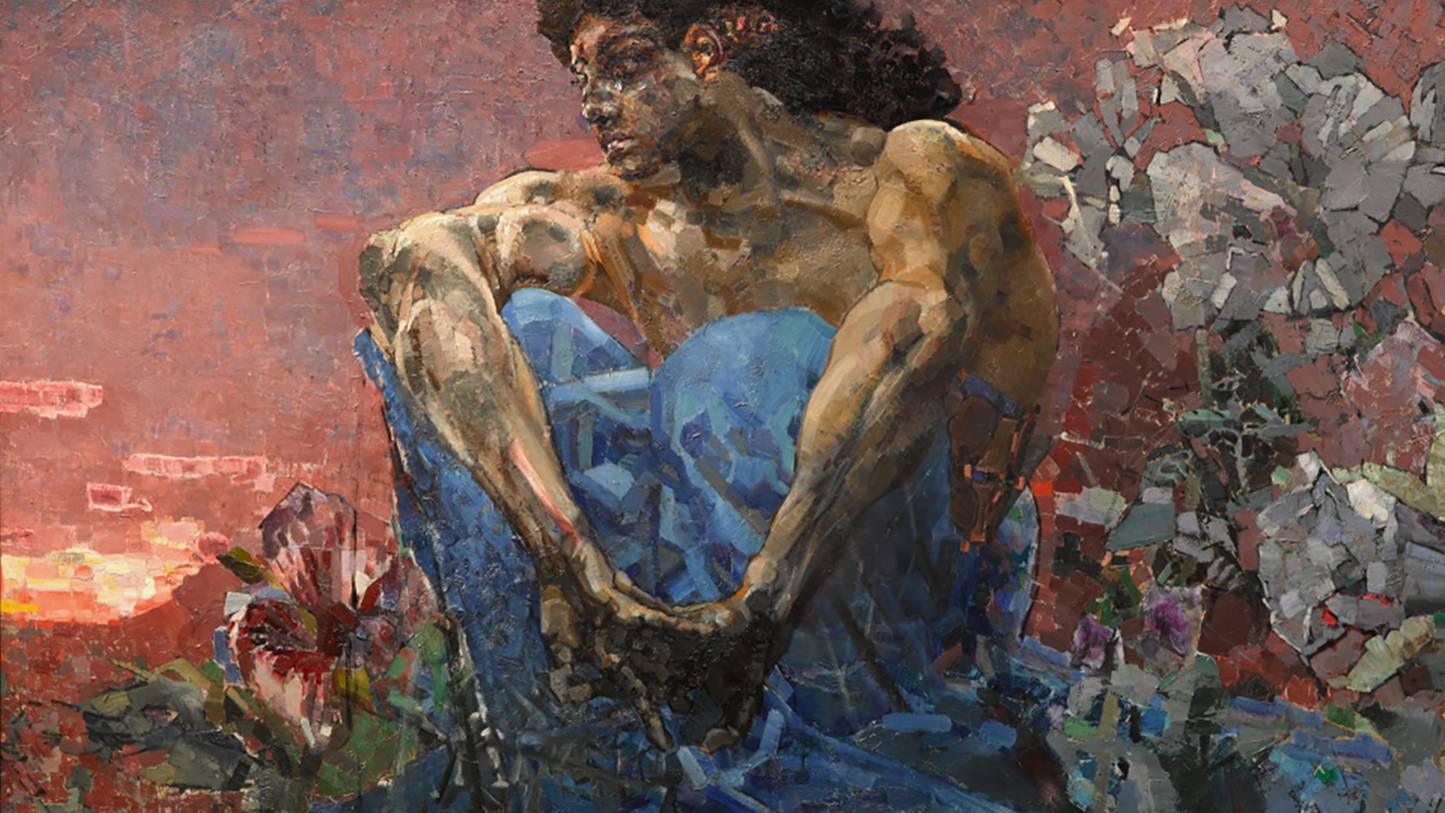
Demons. The cause of the fall
Holy Scripture contains no detailed account of the origin of demons. Naturally, there can be no question of this being the will of God, for everything the Lord created is good. "St Gregory Palamas gives this explanation of their appearance: in the beginning the angels were like little crystals; they let the Divine Light pass through them and reflected it in every direction. Communion with God made them ever more radiant, holy and perfect. But each time, in order to attain greater holiness, greater perfection and greater beauty, they had inwardly to renounce all that they had already attained and, as if having nothing, to surrender themselves into the hands of God. At a certain moment some of the angels became absorbed in gazing at themselves, wavered, and did not want to risk the wondrous beauty they already possessed." Frightened by the unknown, they chose themselves instead of God. As a result their own greatness became for them the centre of the universe, and everything else merely a means of gratifying it.
The first to stumble was Lucifer, or the Morning Star (from the Latin for light-bearer). Before that he had been entrusted with guarding the Earth and was, in essence, its guardian angel. The fear of losing the "post he held" apparently became the cause of his falling away from God. Thus evil appeared in the world, or, more precisely, the bearers of evil appeared. For evil as such does not exist. It has no nature of its own; it is merely a state of nature, more precisely, a state of the will, falsely directed in relation to God.
"Having become spirits of darkness, the fallen angels nevertheless remain beings created by God, and in their self-determination, which opposes the will of God, they are possessed by a desperate striving for non-being, which they will never attain. Their eternal falling away into non-existence will never have an end."
Free will in angels
Had the fallen angels not ventured to tempt man, they would still have had a chance of repentance. At least, so St Basil the Great believed. But envy of man as the highest of creatures destroyed them finally. The choice they once made — to establish themselves for ever in hatred of God — was entirely conscious; figuratively speaking, this choice was pure: it did not depend on the weakness of the flesh, as often happens with man, and was determined solely by their own will. So they made their choice once and for all: the greater part remained with God, but some fell away from Him.
Why then did God not correct the demons or, if that was impossible, destroy them altogether? "Such is the property of the freedom He granted. God once and for all renounced unlimited action over free creatures and ceded to them, as it were, a part of His Divinity... The evil angels, without doubt, saw this renunciation on God's part clearly and knew that God would never take back what He had given. Therefore they could boldly enter into battle with God, knowing that their independence would continue for all eternity" (St Innocent).
Where the demons dwell
Lucifer and those who followed him were cast down: "I beheld Satan as lightning fall from heaven" (Luke 10:18, King James Version), says the Saviour. But where are they now? The Apostle Paul has an expression that points to the dwelling place of the fallen spirits: it is the region under heaven, that is, the air (Eph. 2:2). Church writers explain these words in the sense that the region under heaven is our visible world. Besides, the unclean spirits seek to dwell in man, of which there are many indications in Holy Scripture.
The action of evil spirits in the world
The apostles warn Christians: "the devil, as a roaring lion, walketh about, seeking whom he may devour" (1 Pet. 5:8, King James Version); he sows evil thoughts in people's hearts (Matt. 13:25) and pushes them to crimes (John 13:2). Having found a weak spot in a person, the demons try in one way or another to act upon it.
Abba Evagrius of Pontus compares this process of diabolical temptation to the work of a doctor who, tapping a person's body with a little hammer, determines the nervous reaction and on that basis draws conclusions. In the same way the demons "tap" a person in search of his weaknesses.
And although over the whole existence of mankind the devil has amassed vast experience of every kind of action aimed at harming man, it is important to understand that he can apply it only if we ourselves allow him to. That is, if we ourselves open an entrance for him — a door, a window vent, or at least a crack through which he will get in. This vent is nothing other than our deeds or intentions, especially our hatred. For, according to Abba Evagrius, we become most like the demons when we give free rein to malice and hatred.
It must be admitted that the devil does have considerable success, if one may put it that way, in seducing people. Not for nothing does Scripture say that "the whole world lieth in wickedness" (1 John 5:19, King James Version), and the devil is called "the prince of this world" (John 12:31, King James Version) and "the god of this world" (2 Cor. 4:4, King James Version). Yet such names applied to the devil by no means mean that the world actually belongs to him. But that there are a great many people who have submitted to him and serve him willingly is beyond doubt. All these people are that peculiar world of which the unclean spirit is prince.
How should one regard the devil?
Those people are badly mistaken who attach exaggerated importance to the devil. For some reason it seems to them that the devil influences every side of a person's life and shows his presence everywhere. "On this soil a multitude of superstitions grows, from which even church people are not free. A multitude of 'folk remedies' have been invented that were supposed to prevent Satan from entering a person. For example, some people, when yawning, make the sign of the cross over their mouth so that the devil does not get in through it... With such an attitude the whole of life turns into torture, because all of it is permeated with fear and constant apprehension."
Patristic, and in particular monastic, literature stresses that not fear but contempt — sometimes even with a touch of humour — is the truly Christian attitude to the demons. The sacrament of Baptism bears witness to the same, for it actually begins with exorcisms addressed to the devil. The meaning of these exorcisms is to drive out the devil nesting in a person's heart. "Breathe and spit upon him" means: treat the devil with contempt, pay him no attention, he deserves nothing more.
The hermit monks went further still. In spiritual warfare they formed the vanguard, the shock troops that attacked the enemy directly in his own refuge — the desert. It was precisely the desert that was considered the special dwelling place of the demons after Christianity had spread through the inhabited regions. So the hermits' withdrawal from the world was understood not as an attempt to avoid the struggle with evil, but as a more active and heroic battle with it.
In the deserts, it must be said, the ascetics had a hard time of it. The demons not only appeared to them in the guise of pure angels and not only made all kinds of noise, but often inflicted serious physical injuries. They beat St Anthony the Great so badly that he was left by them "lying on the ground as though dead". His Life tells us how the Lord Himself once came to Anthony's aid during one terrible struggle with the demons. Anthony, "looking up…, saw the roof as it were opening and a certain ray of light descending to him… feeling the help… the ascetic prayed to the vision that had appeared, saying: "Where were You? Why did You not appear to me at the beginning to stop my pains?" And a voice came to him: "Anthony, I was here, but I waited to see your struggle".
All this, however, concerns the vanguard. We, ordinary people, need at least to know that when the devil tries to slip us all kinds of thoughts or dreams, we are not able to forbid him to make mischief in this way. It is as useless as trying to stop crows from flying over our heads. But not to let him build a nest on our head, that is, not to follow the train of the thoughts he imposes on us, this we are obliged to do.
As for the future, as St John of Damascus writes, the demons do not know it, but they foretell it. Yet one must not believe them, even though they may speak the truth many times.
***
"Our life can be likened to a battlefield on which the demons, by means of their tempting thoughts, wage furious war against us... But in this struggle we are not left to ourselves alone. We have the image and the teaching of Christ, who has already conquered Satan, and, besides, the mighty support of the angels of God. If a person loses in this struggle, it is not because of the superior strength of the adversary nor because of the negligence of his defenders, but solely because of his own sloth! It depends on us alone whether to accept the 'demonic thoughts' of our adversary or the 'angelic thoughts' of our defenders, and so to lead the life of a demon or of an angel. If a person takes on the dominant demonic principle — anger — he himself becomes a 'demon', a 'serpent'. If, on the contrary, he assimilates the 'angelic manner of conduct' by imitating the 'angelic virtue' — meekness — he attains the 'almost angelic state' and becomes 'equal to the angels'."


Comments