
I was running away…
Not from war and not from pursuers — from something far more everyday, and therefore more dangerous. From the noise that does not die down even at night. From screens that shine in your face when you want to close your eyes. From news in which truth and lies are mixed so thickly that you can no longer tell which is which. From the city bustle in which a person becomes just one more dot in the stream, hurrying who knows where and why.
I am simply a tired traveller — not in the sense of kilometres, but in the sense of the soul.
My heart beat heavily, my thoughts whirled like dust in a ray of sunlight, and inside me a strange emptiness had settled, one that no city entertainments could fill.
Just two weeks ago I was not even planning to go to that particular place. Someone mentioned the Hustynia Convent in passing. Someone said: "It's quiet there." That turned out to be enough.
There are days that change nothing. And there are moments after which a whole life changes…
I walked the last few kilometres on foot along a road that led ever deeper into the greenery. The air became different — denser, cleaner, as if someone had deliberately filtered the city's lies and anxiety out of it.
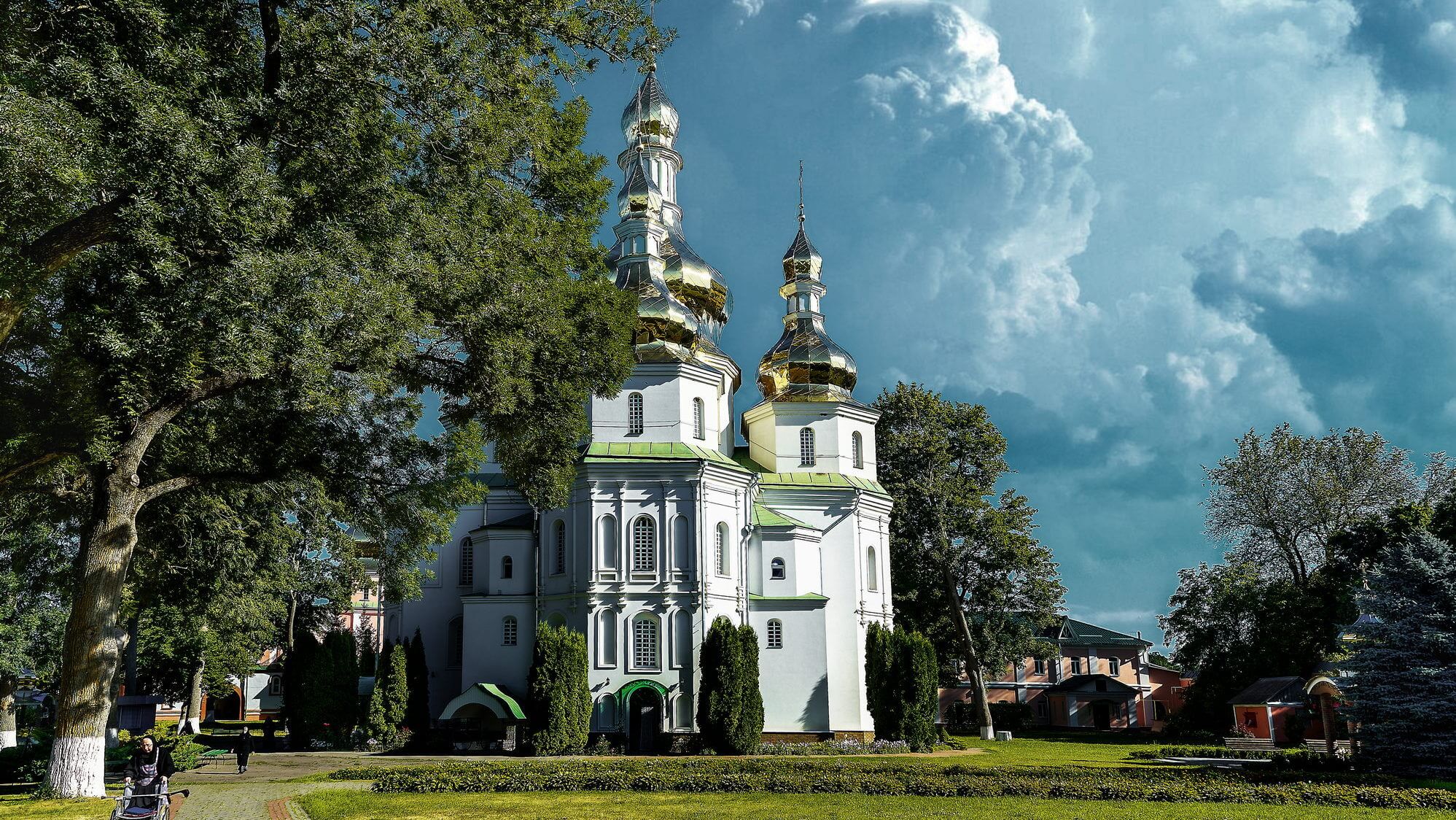
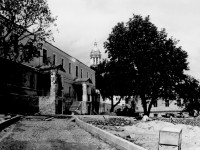
Here it is — the Hustynia Holy Trinity Convent. A place where time flows differently. A little history. This community was born more than four centuries ago, around 1600. Monks who had come from Mount Athos and from the Kyiv-Pechersk Lavra were seeking solitude. They chose an island in the middle of the Uday River, overgrown with such dense forest that the name Hustynia itself came from it. The first wooden church in honour of the Holy Trinity appeared as early as 1614. Then came fires, destruction, moves to a new site. The monastery was supported by the Vyshnevetskyi princes, Metropolitan Petro Mohyla, Bohdan Khmelnytskyi, and Hetmans Samoilovych and Mazepa. Chronicles were written here, people prayed here, centuries were lived through here. In Soviet times the monastery was closed and turned now into a children's home, now into a hospital. And in the 1990s it was reborn, this time as a convent. The walls that had survived so many storms were filled with prayer once more. Ukrainian Baroque, white walls, green domes — all of this now stands as though there had been no destruction.
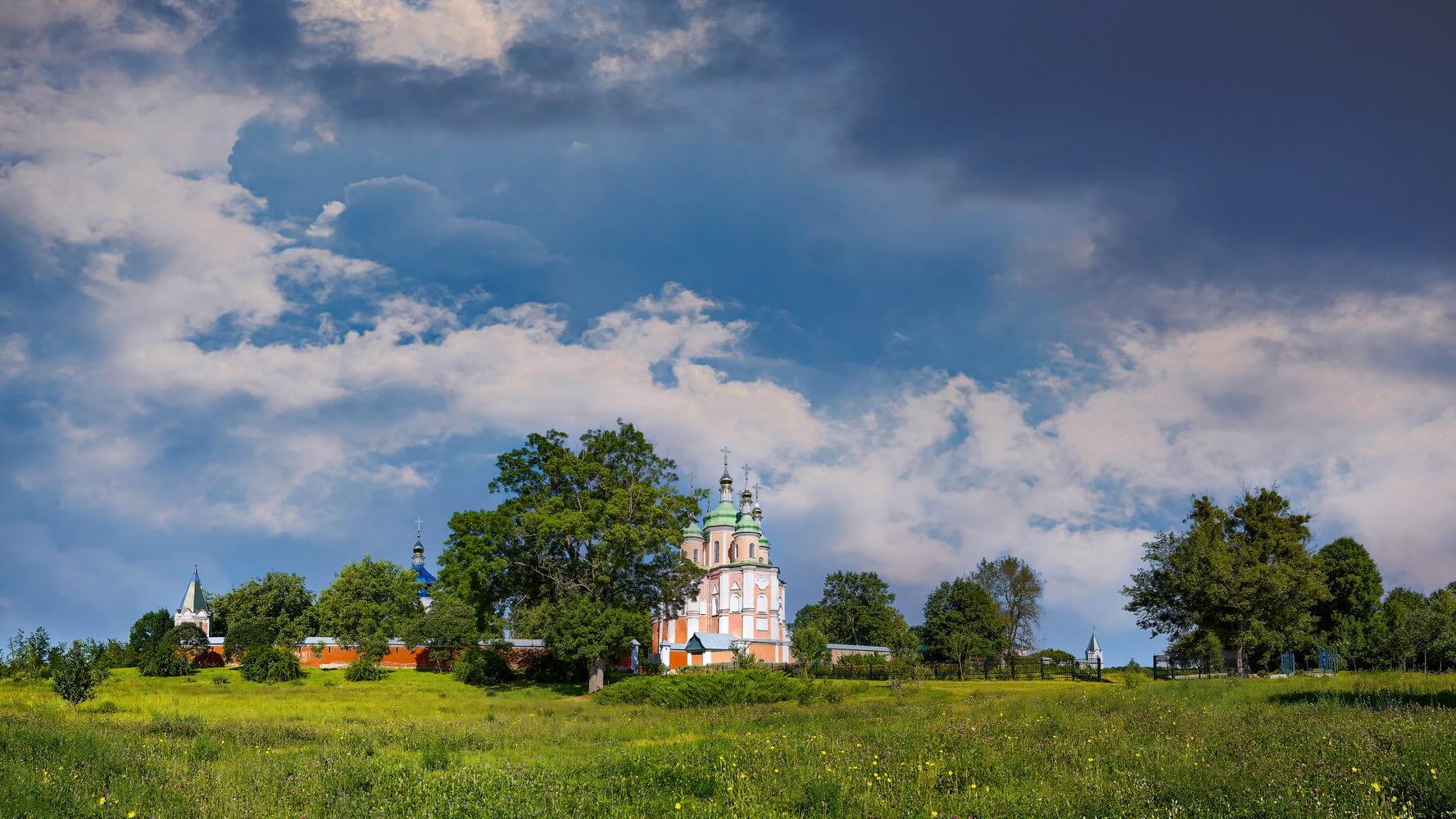
But I did not come for the history. I came for the silence. And I received far more than that.
What struck me first was harmony. Not the showy kind that is sometimes put on for tourists, but a genuine, deep one. The grounds of the convent were tended to the last blade of grass, yet without strain. Flowers grew as if they had chosen their own place. The trees stood with calm dignity. The air smelled of herbs, honey, fresh wood and something else — something very pure, almost holy. I walked slowly, afraid of disturbing this harmony with my city breath.
The sisters… I was amazed at their kindness and attentiveness. They did not fuss around the pilgrims or force conversations on them, but if you came up to them — there was always a warm word, a calm look, a readiness to help. No forced smile, no "service". Just human warmth, mixed with monastic concentration. They looked at you as if they saw not a weary stranger, but a person who was having a hard time right then and whom one could help a little simply by being there.
And their capacity for work… I still smile when I remember it. The sisters darted around the grounds of the convent on bicycles like little bees. One carried an armful of fresh herbs, another — jars of honey, a third — some kind of utensils, a fourth — crates of vegetables. The wheels rustled softly along the paths, black veils fluttered, faces were focused and at the same time amazingly calm. What is so special about that, you might think? Ordinary household life. And yet the abbess, apparently, looks after their legs and promotes gymnastics very actively! I stood to one side and watched these quick, light figures flitting to and fro, and felt something inside me thawing. Here work was not drudgery. Here work was joy, prayer, a continuation of care for a home that belongs not to them, but to God. Here nobody spoke of love for one's neighbour. Here it was simply carried in baskets every day, grown in garden beds, baked into bread, poured into jars of honey and left on the clean paths.
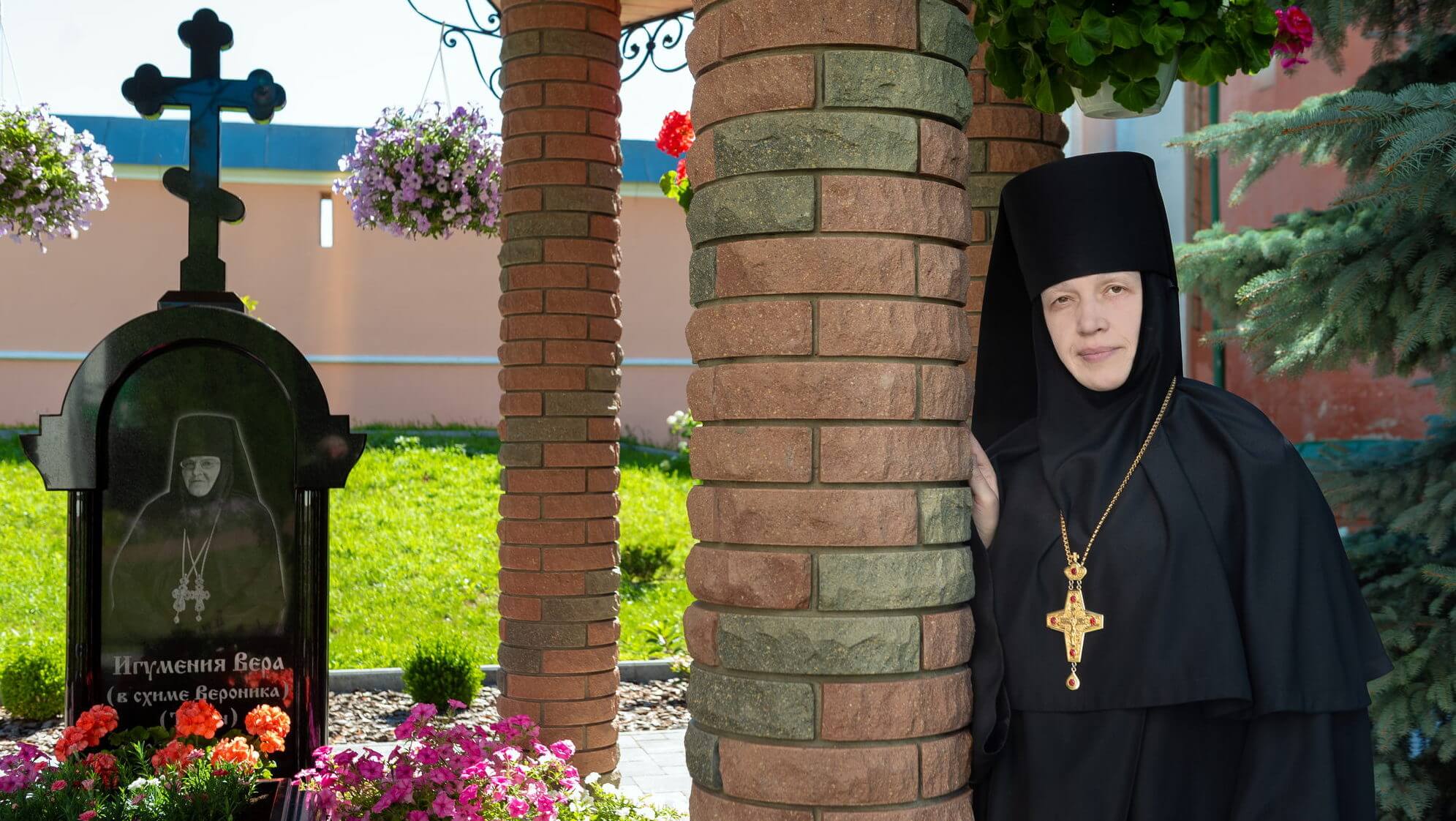
In every detail, in every frame I saw care and love for the human being. Not loud, not declarative — quiet, everyday. The benches stood exactly where you want to sit down. The paths were even, so that no one would stumble. The flowers were planted to please the eye in winter and in summer alike. Even the water from the spring seemed especially delicious — not because it is wonderworking (though who knows?), but because someone had carefully kept it for those who would come.
I stayed. I listened. And I breathed in.
A city person grows unused to hearing real silence. Here it was full. I heard ants gathering their stores for the winter — yes, I really heard them, because in such silence even their tiny labour becomes discernible. I heard birds singing — not for people, but simply because they felt good. I heard the rustle of leaves, the splash of water in the Uday, the distant ringing of a bell. And the air…
I was literally drunk on the fresh air.
City people should not be plunged into such purity so abruptly. My lungs, accustomed to exhaust fumes and dust, at first even resisted. My head spun. My heart beat faster. And then the body gave in and began to take in this purity greedily. I breathed deeper than I had breathed in years.
I stood in the church and listened to the singing. The sisters' voices were without showy beauty, without vibrato. But there was truth in them. Every sound came from the heart. The icons looked on sternly and at the same time mercifully. The candles crackled softly. The smell of incense mingled with the smell of fresh bread that someone in the kitchen was already baking. I prayed — or tried to pray. The words came with difficulty. The city bustle still sat in me like a splinter. But little by little it began to come out.
One sister told of bees, another of herbs, a third simply kept silent nearby, and that silence was dearer than any words. I watched them work and understood: here there is no division into the "important" and the "unimportant". Every little thing is part of a greater whole. Every jar of honey, every bunch of mint, every washed path is love embodied in deed.
The sky is closer here. I thought about how many lies were left there, in the city. How many anxieties. How many people who run without knowing where. And here is a place where you can stop. Not forever. Simply stop and remember who you really are.
And then it was time to leave. I packed my things slowly, almost reluctantly. I bowed to the churches. The sisters saw me off with warm glances. The abbess said quietly: "Come again. There is always a place here for those who seek peace."
I travelled back along the same road. The city was already waiting ahead — with its bustle, with its onslaught of lies, with its anxieties. But inside me something different now lived. A small island of Hustynia. A silence in which you can hear the ants at work. The voices of the sisters. The rustle of bicycle wheels. The smell of honey and fresh air that makes your head spin at first.
I was no longer simply a tired traveller. I had become a person who knows that there is a place where you can lay down all your burdens at the gate and, at least for a time, remember what it is like — simply to be. To be in harmony. To be in goodness. To be in faith. And when the city begins once more to weigh on me with its lies and noise, I will know: somewhere out there, on the bank of the Uday, among dense forest and white walls, the sisters on bicycles go on with their quiet labour. They go on praying. They go on guarding this little island of calm for all who, like me, will one day come here weary and leave — a little different.
***
Information for those who want to come:
Do not go there without first calling the number listed on their website.
There may be various circumstances there, various obediences or events. After all, this is a monastery, not a museum. People there are working out their salvation, and they should not be disturbed.
Explain to the abbess who you are and why you want to come, what problems you have — you will certainly be listened to and advised how and what to do. You can also come there for a few days to stay, help the sisters, pray together with them, rest your soul. But everything is done with a blessing, after speaking with the abbess.
And I strongly advise looking in at their shop. You will not find such high-quality products anywhere. Sunflower oil, and honey, and preserves, and jams, and dried fruit, and teas. All of this will then come in very handy as gifts for your friends and relatives.


Comments